
 UAE
UAE
 Qatar
Qatar
 Pakistan
 KSA
KSA
 Oman
Oman
 Kuwait
 Bahrain
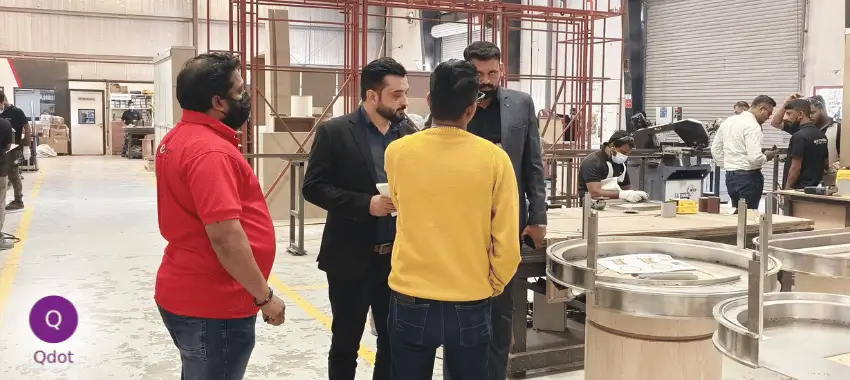
Qdot provides GMP consultancy in UAE for organizations that need stronger manufacturing controls, documented procedures, staff competence, traceability, hygiene discipline, and readiness for the audit or regulatory route relevant to their industry. GMP is not one universal standard. The applicable requirements depend on what the business manufactures, whether that is pharmaceutical or medical products, cosmetics and personal care products, food and beverages, supplements, or other controlled products.
Why GMP consultancy in UAE matters
Good Manufacturing Practice is about maintaining controlled and repeatable conditions so products are consistently produced, handled, stored, and documented according to applicable quality and regulatory expectations. A practical GMP consultancy project identifies weaknesses in facilities, processes, hygiene, documentation, people, materials, equipment, traceability, deviations, and corrective actions, then helps the organization build controls that can be maintained in daily operations.
GMP requirements in UAE depend on your industry
The term GMP covers different industry and regulatory routes. Businesses should first identify which framework applies to their products and activities instead of assuming that one GMP certificate or one standard applies to every sector.
| Sector | Typical GMP framework or route |
|---|---|
| Pharmaceuticals and medical products | Applicable UAE regulatory GMP requirements. For relevant medical-product manufacturing facilities, the Emirates Drug Establishment (EDE) operates a GMP compliance certificate process that includes manufacturing-site inspection. |
| Cosmetics and personal care | ISO 22716 Cosmetics GMP is a key framework for the production, control, storage, and shipment of cosmetic products. |
| Food and beverage | GMP and prerequisite controls supporting the applicable food-safety system, including HACCP or ISO 22000 where relevant. |
| Nutraceuticals and supplements | Product- and regulatory-route-specific GMP controls based on the type of product, manufacturing activity, and applicable requirements. |
| Contract manufacturing, filling, packing, and labeling | GMP controls based on the product handled, process responsibility, hygiene risks, traceability requirements, and customer or regulatory expectations. |
ISO 22716 and cosmetics GMP
ISO 22716 is specifically focused on Good Manufacturing Practices for cosmetic products. It provides guidelines for production, control, storage, and shipment. For cosmetics, skincare, perfume, personal care, filling, packing, and private-label operations, Qdot can help businesses review existing controls, develop practical procedures and records, train teams, and prepare the manufacturing system for applicable customer, certification, or market requirements.
Pharmaceutical and medical-product GMP in UAE
Pharmaceutical and medical-product manufacturing follows a different route from cosmetics GMP. For relevant facilities, UAE GMP compliance involves regulatory requirements administered by the Emirates Drug Establishment, including manufacturing-site inspection. Consultancy support should therefore focus on preparing the management system, facility controls, documentation, personnel responsibilities, records, and implementation evidence required for the applicable regulatory process. Qdot provides implementation and readiness support; regulatory approval or compliance certification remains with the competent authority.
Food manufacturing GMP and prerequisite controls
Food businesses also rely on GMP controls, but these are normally applied as part of the wider food-safety system rather than treated as ISO 22716. Typical areas include personal hygiene, cleaning and sanitation, pest control, equipment condition, storage, temperature control, supplier management, contamination prevention, traceability, and documented operating practices. These controls can support HACCP implementation and ISO 22000 food safety management where applicable.
What GMP consultants in UAE normally do
GMP consultants help organizations translate applicable requirements into practical facility, process, documentation, and people controls. The exact project scope depends on the industry, product, regulatory route, business size, and current level of maturity.
Our GMP consulting services in UAE typically include
- Gap analysis:
Reviewing the existing manufacturing system, facility condition, process controls, documentation, records, hygiene practices, and applicable GMP requirements to identify gaps and priorities. - Regulatory and framework mapping:
Helping the business identify whether its GMP route relates to pharmaceutical or medical-product requirements, ISO 22716 cosmetics GMP, food GMP and prerequisite controls, or another product-specific framework. - Facility and process review:
Assessing premises, layout, utilities, personnel flow, material flow, contamination risks, cleaning arrangements, storage, equipment, and production controls. - Documentation and SOP development:
Preparing or improving procedures, specifications, forms, logs, batch or production records, cleaning records, maintenance records, training records, deviation records, complaint records, and corrective-action documentation. - Implementation guidance:
Helping teams apply GMP controls in receiving, storage, dispensing, production, filling, packing, labeling, release, dispatch, change control, and other relevant activities. - Training and awareness:
Building competence for production teams, quality personnel, warehouse staff, supervisors, maintenance teams, hygiene personnel, and management. - Traceability, deviation, and CAPA support:
Strengthening product and material traceability, investigation of deviations, root-cause analysis, corrective action, preventive controls, complaint handling, and recall readiness where applicable. - Internal review and readiness support:
Checking implementation evidence and helping the organization address weak areas before an authority inspection, certification audit, customer audit, retailer assessment, or other external review.
How Qdot approaches GMP consultancy projects
Qdot begins by identifying the client's products, manufacturing activities, applicable GMP route, facility condition, process flow, quality risks, documentation maturity, and external requirements. From there, the project is structured around the actual operation instead of a generic document package.
A practical GMP implementation sequence usually covers:
- Define the applicable route: Confirm the products, activities, regulatory context, customer requirements, and GMP framework relevant to the business.
- Diagnose: Review the facility, processes, people, equipment, hygiene controls, records, and current compliance gaps.
- Design: Develop the required procedures, responsibilities, records, controls, specifications, and implementation plan.
- Implement: Apply controls on the floor and generate genuine records through the responsible departments.
- Develop competence: Train employees and process owners so GMP responsibilities are understood and consistently followed.
- Review and prepare: Evaluate implementation, close gaps, and prepare the organization for the relevant external assessment or inspection.
Who should consider GMP consultancy in UAE
GMP consultancy can support a broad range of controlled manufacturing and product-handling businesses, including pharmaceutical and medical-product manufacturers, cosmetics and personal care manufacturers, perfume and fragrance businesses, food and beverage manufacturers, nutraceutical and supplement operations, contract manufacturers, private-label producers, filling and packing units, laboratories, warehouses, importers, distributors, and companies preparing new production facilities.
Cities, emirates, and industrial areas covered in UAE
Qdot supports GMP implementation projects across Dubai, Abu Dhabi, Sharjah, and the wider UAE, including manufacturing facilities, filling and packing units, warehouses, laboratories, and regulated production sites.
- Major emirates and cities: Dubai, Abu Dhabi, Sharjah, Ajman, Ras Al Khaimah, Fujairah, Umm Al Quwain, and Al Ain.
- Industrial and commercial zones: Jebel Ali, Dubai Industrial City, Dubai Investment Park, KEZAD, ICAD, Mussafah, SAIF Zone, Hamriyah Free Zone, Ajman Industrial Area, and related manufacturing and trading locations.
- Project types: New facility preparation, existing-system improvement, customer-audit readiness, authority-inspection preparation, ISO 22716 implementation, food GMP strengthening, and multi-site standardization.
Industries that benefit from GMP consulting services
- Pharmaceutical and medical-product manufacturing
- Cosmetics, skincare, personal care, perfume, and fragrance manufacturing
- Food and beverage production, processing, packing, and storage
- Nutraceutical, supplement, and controlled-product manufacturing
- Contract manufacturing and private-label production
- Filling, packing, labeling, and repacking operations
- Laboratories and quality-control support activities
- Raw-material warehouses, controlled storage, and distribution operations
Benefits of practical GMP implementation
The value of GMP consultancy is not limited to passing an audit. A well-implemented system improves control over the conditions that affect product quality, consistency, traceability, and compliance.
- Clearer understanding of the GMP requirements applicable to the business
- Better control over facilities, hygiene, equipment, materials, and production processes
- Stronger SOPs, records, traceability, deviation handling, and corrective actions
- Better staff awareness and accountability for manufacturing controls
- Improved readiness for regulatory inspections, certification audits, customer audits, and retailer requirements
- More consistent operations instead of last-minute audit preparation
- Better management visibility over manufacturing and quality risks
- A stronger foundation for scaling production or standardizing multiple sites
Why choose Qdot for GMP consultancy in UAE
Qdot focuses on practical implementation rather than treating GMP as a generic paperwork exercise. The consultancy scope is built around the client's industry, product, facility, applicable framework, and external requirements.
- Support for pharmaceutical, medical-product, cosmetics, food, and other controlled manufacturing environments
- ISO 22716 implementation support for cosmetics and personal care operations
- Practical facility, process, documentation, and training support
- Guidance from gap analysis through implementation and readiness review
- Support for single-site and multi-site GMP projects across the UAE
- Flexible onsite, remote, and hybrid consultancy depending on project needs
- Integration support with ISO 9001, HACCP, ISO 22000, and other relevant management systems where appropriate
GMP consultancy and GMP certification are different
GMP consultancy focuses on implementation: assessing gaps, strengthening facilities and processes, preparing documentation, training teams, and building evidence that the required controls are working. The audit, inspection, approval, or certification route depends on the industry and applicable authority or certification arrangement. If your system is already implemented and you want to understand the assessment route.
Contact us
If your organization is looking for GMP Consultancy in UAE, Qdot can support you with a structured implementation approach based on your products, industry, facility, and applicable GMP route. Support can include gap analysis, facility review, documentation, SOP development, training, implementation, internal review, and readiness before the relevant external assessment.
FAQs
GMP consultancy in UAE helps manufacturers and controlled-production businesses assess gaps, develop procedures and records, strengthen facility and process controls, train teams, and prepare for relevant audits, inspections, or customer requirements.
No. The applicable GMP framework depends on the product and industry. Cosmetics commonly use ISO 22716, while pharmaceutical and medical-product manufacturing follows applicable UAE regulatory GMP requirements. Food businesses use GMP and prerequisite controls within their relevant food-safety framework.
No. ISO 22716 provides Good Manufacturing Practice guidelines specifically for cosmetic products. Other sectors follow the GMP requirements relevant to their products and regulatory route.
GMP consultancy can support pharmaceutical and medical-product manufacturers, cosmetics and personal-care manufacturers, food and supplement businesses, contract manufacturers, filling and packing facilities, laboratories, warehouses, and other controlled manufacturing operations.
Typical support includes gap analysis, facility and process review, SOPs and records, hygiene and contamination controls, training, traceability, deviation and corrective-action systems, internal reviews, and readiness checks.
For relevant medical-product manufacturing facilities, the Emirates Drug Establishment operates the UAE GMP compliance certificate process and requires manufacturing-site inspection. Consultants can support preparation and implementation but do not replace the regulatory authority.
The timeline depends on the industry, facility condition, product range, process complexity, documentation maturity, and gaps identified. A small operation may require less time than a complex or multi-site manufacturing system.
Yes. GMP controls can be scaled to the size, activities, products, risks, and applicable requirements of SMEs as well as larger organizations.
Yes. Qdot supports GMP implementation projects across Dubai, Abu Dhabi, Sharjah, Ajman, Ras Al Khaimah, Fujairah, Umm Al Quwain, Al Ain, and other UAE locations.