
 UAE
UAE
 Qatar
Qatar
 Pakistan
 KSA
KSA
 Oman
Oman
 Kuwait
 Bahrain
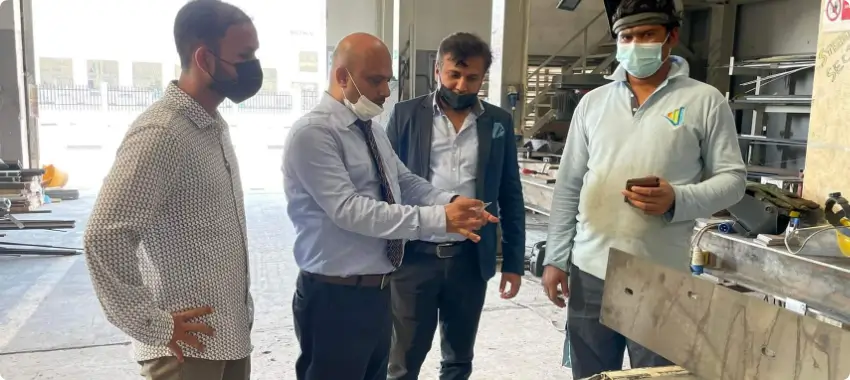
Qdot helps food businesses build a practical Food Safety Management System (FSMS) aligned with ISO 22000. Organizations across Dubai, Abu Dhabi, Sharjah, and other emirates use ISO 22000 consultants to strengthen food safety controls, hazard management, traceability, legal compliance, and certification readiness.
Why ISO 22000 consultancy in UAE matters
Many businesses want ISO 22000 certification, but the real challenge is creating an FSMS that works in daily food operations. ISO 22000 consultancy helps organizations identify food safety hazards, define control measures, strengthen prerequisite programmes, assign responsibilities, maintain records, and improve system discipline in a way that supports real operational control instead of paperwork only.
What ISO 22000 consultants in UAE normally do
ISO 22000 consultants in UAE usually support organizations from the starting point until audit readiness. That support often includes gap analysis, FSMS planning, hazard-based documentation, implementation guidance, staff awareness, internal audits, management review, and readiness support before the external certification audit.
Core ISO 22000 areas food businesses need to address
ISO 22000 consultancy normally focuses on the practical application of the main FSMS requirements, including organizational context, leadership commitment, food safety policy, hazard identification, prerequisite programmes, operational controls, traceability, emergency preparedness, communication, supplier control, monitoring, verification, internal audit, management review, corrective action, and continual improvement.
Our ISO 22000 consulting services in UAE typically include
- Gap analysis:
Reviewing current food safety practices against ISO 22000 requirements and identifying control gaps, weak points, and implementation priorities. - FSMS planning:
Defining scope, food-chain position, products, processes, sites, outsourced activities, responsibilities, and implementation stages. - Documentation support:
Preparing food safety manuals where needed, procedures, process flow support, hazard analysis records, forms, registers, work instructions, and controlled templates. - Implementation guidance:
Helping departments apply the FSMS in purchasing, receiving, storage, preparation, processing, packaging, dispatch, transport, and support functions. - Hazard and control planning:
Supporting hazard analysis, control measure selection, monitoring methods, verification planning, and corrective action flow. - Training and awareness:
Building competence for food handlers, supervisors, internal auditors, process owners, and management teams. - Internal audit support:
Planning and conducting internal audits to evaluate FSMS effectiveness before certification. - Management review and readiness support:
Helping leadership review food safety performance and preparing the organization for stage 1 and stage 2 audits.
How Qdot approaches ISO 22000 consultancy projects
Qdot's consulting approach is implementation-focused. We begin by understanding the client's food activities, products, process flow, facilities, outsourced operations, risks, customer expectations, and regulatory needs. The FSMS is then structured around real food safety controls so the ISO 22000 system supports consistency, traceability, and risk management across the business.
A practical ISO 22000 implementation sequence usually covers:
- Diagnose: Study the current situation, understand the food-chain context, define FSMS scope, and identify gaps in controls, records, and food safety practices.
- Design: Build the FSMS structure, documented information, hazard-based controls, communication flow, and implementation roadmap.
- Implement: Roll out procedures, monitoring records, traceability methods, hygiene controls, and responsibilities across relevant functions.
- Develop: Train employees and process owners so the system is understood, followed, and maintained internally.
- Assure: Conduct internal audits, review results, and support management review before certification.
- Prepare for certification:
Help the client close weak areas and face the certification audit with better confidence.
Who should consider ISO 22000 consultancy in UAE
ISO 22000 consultancy is suitable for food manufacturers, processors, packers, central kitchens, restaurants, catering companies, cold stores, distributors, transporters, ingredient suppliers, and businesses in the food chain that want stronger food safety control and structured certification readiness.
Cities, emirates, and industrial areas covered in UAE
Qdot supports ISO 22000 consultancy projects across the UAE and aligns page content with the locations food businesses actually search for. This includes single-site and multi-site support across factories, kitchens, warehouses, retail support operations, logistics hubs, and free-zone facilities.
- Major emirates and cities: Dubai, Abu Dhabi, Sharjah, Ajman, Ras Al Khaimah, Fujairah, Umm Al Quwain, and Al Ain.
- Industrial and commercial zones: Jebel Ali, Dubai Industrial City, KIZAD, ICAD, Mussafah, SAIF Zone, Hamriyah Free Zone, KEZAD-linked areas, and similar food and logistics hubs.
- Use case: Suitable for food factories, catering units, bakery operations, beverage plants, restaurants, warehouses, distributors, and food-service support businesses.
Industries that benefit from ISO 22000 consulting services
ISO 22000 consultancy in UAE is relevant to many sectors because food safety management affects hazard control, legal compliance, traceability, supplier assurance, and customer confidence across the food chain.
- Food manufacturing, processing, packing, and repacking operations
- Catering, restaurants, central kitchens, cloud kitchens, and bakery businesses
- Cold storage, warehousing, distribution, and food logistics operations
- Beverage production, bottling, and ingredient handling activities
- Importers, exporters, traders, and food-contact supply-chain businesses
- Slaughtering, meat handling, poultry, seafood, and dairy-related operations
- Retail support, meal preparation, and institutional food service activities
- Multi-site food groups, franchise operations, and regulated support services
Benefits of hiring ISO 22000 consultants in UAE
A good ISO 22000 consultant should help the business improve food safety control and system performance, not just complete documents for the audit.
- Clearer hazard identification, control planning, and operational accountability
- Better document control, records discipline, and traceability across the food chain
- Stronger hygiene, sanitation, storage, handling, and supplier-control practices
- Better monitoring of food safety objectives, verification activities, and corrective actions
- Improved internal audit results and management review discipline
- Better readiness for certification, surveillance, and recertification audits
- Greater confidence for customer approvals, retailer expectations, and export support needs
- More sustainable continual improvement instead of one-time audit preparation
Why choose Qdot for ISO 22000 consultancy in UAE
Qdot focuses on practical FSMS implementation. The goal is to help the client build an ISO 22000 system that is usable, auditable, and aligned with real food operations. Our support is designed to keep consultancy intent clear while helping organizations reach certification readiness in a structured way.
- Implementation-focused support rather than template-only consulting
- Experience across food manufacturing, catering, warehousing, distribution, and service-chain operations
- Support for single-site and multi-site ISO 22000 projects in the UAE
- Practical training and awareness sessions linked to actual food safety operations
- Guidance from gap analysis to internal audit and readiness review
- Flexible onsite, online, and hybrid delivery models
- Support that fits both standalone FSMS and integrated management systems
Contact us
If your organization is looking for ISO 22000 Consultancy in UAE, Qdot can support your business with a practical and structured FSMS implementation approach. We help clients strengthen food safety controls, documentation, training, internal audit, and certification readiness across the UAE.
FAQs
ISO 22000 consultancy in UAE provides support for designing, implementing, improving, or maintaining a Food Safety Management System aligned with ISO 22000 requirements.
No, consultants prepare the system. Certification is issued by an independent certification body after a successful audit.
The timeline depends on organization size, product complexity, and food safety risks. Smaller systems move faster, while complex operations take longer.
Yes, ISO 22000 consultancy works for SMEs and large organizations. The FSMS is scaled based on business size and food safety risk.
Typical documents include food safety policy, hazard analysis, prerequisite programs, traceability records, monitoring logs, audits, corrective actions, and management reviews.
Yes, it improves customer confidence, market access, and readiness for audits and inspections.
Yes, internal audits and management reviews are supported to verify FSMS effectiveness before certification.
Yes, services are available across Dubai, Abu Dhabi, Sharjah, Ajman, Ras Al Khaimah, Fujairah, Umm Al Quwain, and Al Ain.
Yes, it improves food safety control, traceability, supplier management, monitoring, and audit readiness.