
 UAE
UAE
 Qatar
Qatar
 Pakistan
 KSA
KSA
 Oman
Oman
 Kuwait
 Bahrain
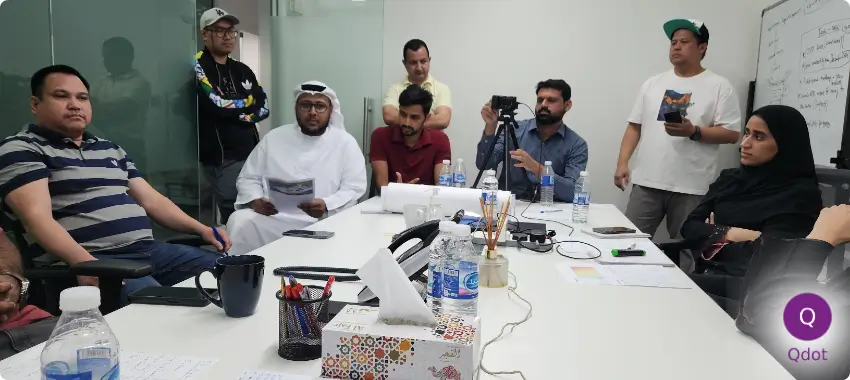
ISO 27001 Consultancy in UAE helps organizations build a practical Information Security Management System (ISMS) aligned with ISO/IEC 27001. Businesses across Dubai, Abu Dhabi, Sharjah, and other emirates use ISO 27001 consultants to protect sensitive information, manage cyber and business risks, improve client confidence, and prepare properly for certification.
Why ISO 27001 consultancy in UAE matters
Information security has become a board-level issue for UAE businesses. Customers, regulators, partners, and tendering authorities often expect stronger control over data, access, systems, suppliers, and incident response. ISO 27001 consultancy helps organizations convert those expectations into a structured ISMS that is practical, auditable, and suitable for the business environment.
What ISO 27001 consultants in UAE normally do
ISO 27001 consultants in UAE usually support organizations from the starting point until certification readiness. The work is not limited to drafting policies. It normally includes ISMS scope definition, risk assessment, control selection, Statement of Applicability support, documented information, awareness, implementation guidance, internal audits support, and management review readiness.
Core ISO/IEC 27001 areas businesses need to address
ISO 27001 consultancy normally focuses on the practical application of the main ISMS requirements, including organizational context, leadership commitment, risk-based planning, support processes, operational control, performance evaluation, and continual improvement. It also requires disciplined treatment of information-security risks through selected controls and evidence of implementation.
Our ISO 27001 consulting services in UAE typically include
- Gap analysis:
Reviewing the current security arrangements, governance, policies, records, technical practices, and control evidence against ISO/IEC 27001 requirements. - ISMS scope and context definition:
Identifying the legal entity, sites, departments, products, services, technologies, and information assets that should fall under the Information Security Management System. - Risk assessment and treatment support:
Helping the organization identify information-security risks, evaluate likelihood and impact, define treatment actions, and maintain a practical risk register. - Statement of Applicability and control selection:
Supporting the selection, justification, exclusion, and implementation planning of relevant Annex A controls according to business risk and scope. - Documentation support:
Preparing or improving ISMS policy, procedures, registers, access-control rules, asset lists, incident records, supplier controls, backup arrangements, and related documented information. - Operational control coordination:
Aligning business, IT, HR, procurement, legal, and operations teams so that selected information-security controls are implemented in a controlled and consistent way. - Awareness and competence development:
Training management, process owners, users, and support teams on security responsibilities, risk awareness, incident reporting, and system discipline. - Internal audit and readiness support:
Evaluating implementation, helping close weaknesses, and preparing the organization for stage 1 and stage 2 certification audit activity.
How Qdot approaches ISO 27001 consultancy projects
Qdot's consulting approach is implementation-focused. We begin by understanding the client's operations, information flows, business dependencies, compliance needs, and security objectives. The ISMS is then developed in a way that fits the actual scope of business activity. The goal is not to produce paperwork only. The goal is to make the system work in practice and generate reliable evidence.
A practical ISO 27001 implementation sequence usually covers:
- Diagnose: Study the current situation, identify business drivers, map information assets and processes, and define ISMS scope and priorities.
- Design: Build the ISMS framework, risk methodology, control-selection logic, documented information structure, and implementation roadmap.
- Implement: Roll out required controls, records, responsibilities, security practices, communication methods, and operational discipline across the selected scope.
- Develop: Train managers, system owners, employees, and support teams so the ISMS is understood and applied consistently.
- Verify: Perform internal audits, review risk treatment status, check evidence, and confirm management review completion before external audit.
- Prepare for certification: Support final readiness actions, close identified gaps, and strengthen audit confidence before stage 1 and stage 2.
Who should consider ISO 27001 consultancy in UAE
ISO 27001 consultancy is useful for organizations that handle sensitive information, manage client data, depend on digital systems, work with regulated customers, or need stronger assurance around confidentiality, integrity, and availability. It is also highly relevant where tender requirements, customer questionnaires, supplier assessments, or contractual commitments demand a recognized ISMS.
Cities, emirates, and industrial areas covered in UAE
Qdot supports ISO 27001 consultancy projects across the UAE and aligns page content with the locations businesses commonly search. Support can be relevant for organizations in major cities, industrial locations, technology hubs, and commercial districts.
- Major emirates and cities: Dubai, Abu Dhabi, Sharjah, Ajman, Ras Al Khaimah, Fujairah, Umm Al Quwain, and Al Ain.
- Business and technology zones: Dubai Internet City, Dubai Silicon Oasis, Dubai Media City, DMCC, DIFC, ADGM, Jebel Ali, KIZAD, SAIF Zone, and other free zones or commercial clusters.
- Use case: Suitable for head offices, data-driven operations, multi-site service businesses, factories, logistics providers, healthcare organizations, fintech companies, and technology-enabled teams.
Industries that benefit from ISO 27001 consulting services
ISO 27001 consultancy in UAE is relevant to many sectors because information security affects trust, continuity, legal exposure, and operational control. The ISMS should always reflect actual business activities and information risks.
- IT, software, cloud, and SaaS businesses: For access control, change management, service resilience, supplier governance, and secure handling of client environments.
- Financial services, fintech, and payment-related operations: For stronger control over sensitive data, client trust, contractual compliance, and audit discipline.
- Healthcare and medical support services: For better protection of patient-related information, system access, third-party controls, and incident handling.
- E-commerce and digital platforms: For data handling discipline, account security, vendor oversight, and resilience of online services.
- Logistics, warehousing, and supply-chain operations: For secure coordination of systems, user access, customer information, transport data, and continuity-related controls.
- Professional services and outsourcing operations: For governance of confidential records, client files, remote work, and personnel responsibilities.
- Manufacturing and industrial businesses: For protection of design, production, supplier, maintenance, and operational records across sites and systems.
- Government-linked and tender-driven organizations: For stronger security posture, audit confidence, and support in meeting customer or authority expectations.
Benefits of hiring ISO 27001 consultants in UAE
A good ISO 27001 consultant should help the organization build an Information Security Management System that is practical, risk-based, and maintainable after the project ends.
- Clearer risk visibility: Information-security risks become easier to identify, prioritize, treat, and monitor.
- Stronger system structure: Policies, procedures, records, and responsibilities become more organized and audit-ready.
- Better cross-functional alignment: Business, IT, HR, procurement, and management teams understand their role in the ISMS.
- Improved customer confidence: An organized ISMS can strengthen trust during client reviews, tenders, and supplier assessments.
- Better incident discipline: Reporting, response, escalation, and corrective actions become more structured.
- More reliable control evidence: The organization can demonstrate that required practices are implemented rather than only documented.
- Better readiness for certification: Internal evidence is stronger before stage 1 and stage 2 audit activity begins.
- More sustainable improvement: The ISMS becomes part of management practice instead of a short-term compliance exercise.
Why choose Qdot for ISO 27001 consultancy in UAE
Qdot focuses on practical ISMS implementation. The objective is to help the client build an ISO 27001 system that reflects real information-security risks, actual business operations, and certification expectations without unnecessary complexity.
- Implementation-focused support: We help organizations build working ISMS practices rather than generic documentation only.
- Strong understanding of certification readiness: Support covers scope, risk treatment, control evidence, internal audits, management review, and readiness for external audit.
- Experience across varied sectors: Projects can be aligned with technology, service, industrial, healthcare, logistics, and commercial business models.
- Flexible delivery model: Support can be provided onsite, remotely, or in a hybrid format based on project needs.
- Coverage across UAE: Projects can be supported in major emirates, cities, industrial areas, and free zones.
- Practical awareness focus: We help management and teams understand responsibilities, not only documentation.
- Support for integrated systems: ISO 27001 can be aligned with ISO 22301, ISO 9001, ISO 20000, ISO 27701, or other management-system requirements where relevant.
Contact us
If your organization is looking for ISO 27001 Consultancy in UAE, Qdot can support your business with a practical and structured implementation approach. We work with organizations across Dubai, Abu Dhabi, Sharjah, Ajman, Ras Al Khaimah, Fujairah, Umm Al Quwain, and Al Ain.
FAQs
ISO 27001 consultancy in UAE provides support for designing, implementing, improving, or maintaining an Information Security Management System aligned with ISO/IEC 27001.
No, consultants prepare the system. Certification is issued by an independent certification body after a successful audit.
Consultancy focuses on implementation and readiness, while certification is the independent audit and approval process.
The timeline depends on organization size, scope, and system maturity. Smaller setups move faster, while complex environments take longer.
Typical documents include ISMS scope, policy, risk assessment, treatment plan, Statement of Applicability, audit records, and management reviews.
No, it is suitable for any organization that handles sensitive information across various sectors.
Yes, risk assessment, treatment planning, and Statement of Applicability are core parts of ISO 27001 consultancy.
Yes, services are available across Dubai, Abu Dhabi, Sharjah, Ajman, Ras Al Khaimah, Fujairah, Umm Al Quwain, and Al Ain.
Yes, it improves risk visibility, access control, incident response, and overall information security management.