
 UAE
UAE
 Qatar
Qatar
 Pakistan
 KSA
KSA
 Oman
Oman
 Kuwait
 Bahrain
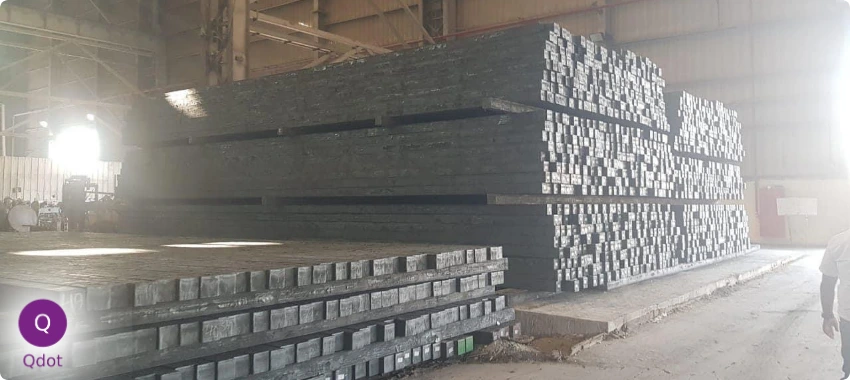
How Qdot has supported Arabian Gulf Steel Industry LLC (AGSI) through five years of phased, multi-standard certification — building an integrated management system across its Abu Dhabi and Sharjah steel manufacturing plants, with corporate oversight from Dubai. From the development of an ISO 50001 energy management system on top of AGSI's existing ISO 9001 framework, through the addition of ISO 14001 environmental management for both plants, to the ISO 45001 occupational health and safety scope extension currently in progress, this is one of the steel sector's most comprehensive Integrated Management System rollouts in the UAE.
| Client | Arabian Gulf Steel Industry LLC (AGSI) |
|---|---|
| Industry | Steel Manufacturing |
| Locations | Abu Dhabi Plant • Sharjah Plant • Corporate Office, Dubai |
| Engagement | 2021 – Present (5+ years, multi-phase, multi-site) |
| Pre-Existing Certification | ISO 9001:2015 Quality Management System, certified by Care Certification |
| Standards Achieved with Qdot | ISO 50001 Energy Management System • ISO 14001 Environmental Management System — both integrated with the existing ISO 9001 QMS into a unified Integrated Management System (IMS) |
| In Progress | ISO 45001 Occupational Health & Safety Management System — IMS scope extension under way for both plants |
| Certification Bodies | Care for ISO 9001:2015 • KBS — EIAC/JAS-ANZ-accredited certification body based in Dubai (ISO 50001, including surveillance and recertification cycles) • Normeira (Formerly TUV Apex) (ISO 14001 for both Abu Dhabi and Sharjah plants, ISO 45001 in plan) |
| Audit Track Record | Successful initial certification audits, plus continuous surveillance and recertification audits passed across all standards over the five-year engagement |
About Arabian Gulf Steel Industry LLC (AGSI)
Arabian Gulf Steel Industry LLC (AGSI) is a UAE-based steel manufacturer operating two production plants — one in Abu Dhabi and one in Sharjah — with corporate functions headquartered in Dubai. AGSI serves the construction, infrastructure, industrial fabrication, and reinforcement segments of the regional market, supplying steel products to projects across the UAE and the wider GCC.
The steel manufacturing sector is one of the most energy-intensive, environmentally significant, and safety-critical industries in the world. Operating two plants in the UAE means AGSI must manage the combined demands of multiple regulatory regimes — federal, Abu Dhabi and Sharjah — alongside the commercial expectations of customers, financiers, and project consultants who increasingly require internationally recognised certifications as a baseline supplier qualification.
The Challenge: Building an Audit-Defensible Integrated Management System Across Two Plants
When AGSI first engaged Qdot in 2021, the company already held an ISO 9001:2015 Quality Management System certification issued by Care Certification, a certification body well-known in the steel manufacturing sector. Quality discipline was in place. What was missing was a structured framework for managing the two areas where the steel sector is most exposed: energy and, in the years ahead, environment and occupational safety.
Steel manufacturing is energy-intensive by its nature. Furnaces, rolling lines, compressed air systems, motors, lighting, and supporting utilities together account for a major share of operating costs and a major share of the plant's carbon footprint. With UAE energy prices on a long-term upward trajectory, with Net Zero 2050 commitments shaping national policy, and with project clients increasingly asking about energy and emissions performance, the case for a formal ISO 50001 Energy Management System was compelling — both commercially and strategically.
But energy was only the first step. AGSI's leadership wanted a roadmap that would, over time:
- Integrate ISO 50001 with the existing ISO 9001 system rather than running parallel, duplicative systems.
- Extend the integrated system to cover environmental management (ISO 14001) for both plants — addressing waste, emissions, water, and resource consumption obligations under UAE federal and Emirate-level environmental regulations.
- Eventually add occupational health and safety (ISO 45001) — non-negotiable for a steel manufacturer with high-temperature operations, heavy machinery, lifting and rigging activities, mobile equipment, and significant workforce exposure.
- Maintain certification continuity across all standards, all plants, and every audit cycle — without surveillance non-conformities or certificate disruptions.
- Use only certification bodies accredited by Global ACI MRA signatories for the relevant scopes so every certificate carries full international weight with project consultants, EPC contractors, financiers, and customers across the GCC.
In short, AGSI did not need a one-off project. AGSI needed a long-term consultancy partner who could build the system once, integrate it cleanly across two plants, and keep it audit-ready year after year as new standards were added.
Why AGSI Chose Qdot
Several factors aligned for AGSI's leadership when evaluating consultancy partners for this multi-year, multi-site programme:
- Pure consultancy model, no commercial ties to any certification body. Qdot's advice on certification body selection is independent — driven by accreditation status, sector competence, and AGSI's commercial interests, not by referral arrangements.
- Established working relationships with leading UAE certification bodies, including KBS, Normeira (Formerly TUV Apex), and others operating across the country.
- Multi-standard, multi-site competence. Qdot consultants are qualified across ISO 9001, ISO 14001, ISO 45001, ISO 50001, and the Integrated Management System frameworks that bring them together, with practical experience in steel and heavy-manufacturing environments.
- A long-term partnership methodology rather than transactional consultancy. The same consulting team supports AGSI through initial certification, surveillance audits, recertification audits, and scope extensions — knowledge accumulates rather than being re-learned each cycle.
- A pragmatic, plant-floor mindset. Documentation alone does not pass an audit on a steel plant floor. Qdot's approach combines documentation, training, and on-site implementation support — the system must work in practice, not just on paper.
The Qdot Approach: A Phased, Multi-Site, Multi-Standard Rollout
Rather than attempting to certify everything at once, Qdot proposed a phased programme aligned to AGSI's commercial priorities, operational readiness, and audit calendar. This allowed AGSI to absorb each standard into day-to-day operations, develop internal competence, and demonstrate continuous improvement at every surveillance cycle.
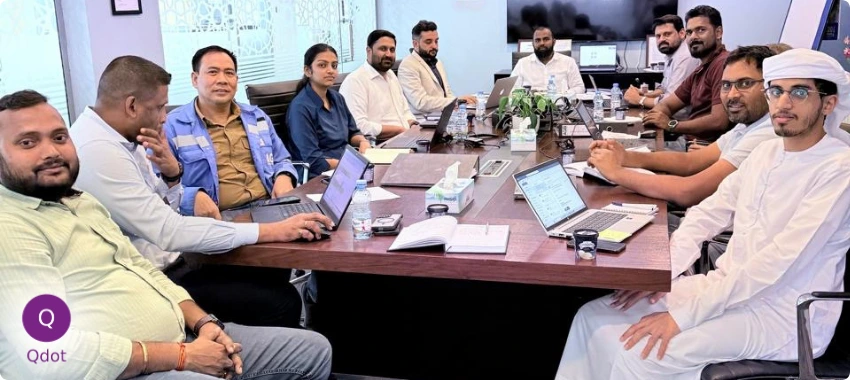
Phase 1 — ISO 50001 Development and Integration with the Existing ISO 9001 System (KBS)
Qdot began with a detailed energy review across both plants — mapping significant energy uses (SEUs), establishing energy baselines, and identifying the operational and behavioural drivers of energy performance. From there, a complete ISO 50001 Energy Management System was developed: energy policy, energy planning, operational controls, monitoring and measurement protocols, energy performance indicators (EnPIs), and management review cadence — all customised to AGSI's furnace, rolling, and utility operations.
Critically, Qdot did not develop ISO 50001 in isolation. The new EnMS was integrated with the existing ISO 9001 Quality Management System, using a common documentation architecture, shared management review structure, harmonised internal audit cycles, and a unified corrective action process. Where ISO 9001 already addressed process controls and customer requirements, ISO 50001 layered in the energy dimension — without creating parallel, duplicative paperwork.
The integrated ISO 9001 + ISO 50001 system was certified by KBS — a certification body based in Dubai accredited by both EIAC and JAS-ANZ — placing AGSI's certificates on internationally recognised accreditation footing under the former IAF MLA, with that recognition now continued through the Global ACI MRA.
Phase 2 — Surveillance and Recertification Continuity
Once initial certification was achieved, Qdot's role transitioned from implementation to continuity. Annual surveillance audits and three-yearly recertification audits across both standards have been planned, prepared for, and supported by the same Qdot team — internal audits conducted, management reviews facilitated, corrective actions closed out, and audit-day support provided on site at both the Abu Dhabi and Sharjah plants. Across every cycle to date, AGSI has maintained clean certification status without disruptions.
Phase 3 — ISO 14001 Environmental Management System for Both Plants (Normeira (Formerly TUV Apex))
Two years into the engagement, AGSI's leadership requested the next scope extension: ISO 14001 Environmental Management System for both the Abu Dhabi and Sharjah plants, fully integrated with the existing IMS.
Qdot developed the EMS using the same integration-first principle: shared documentation, harmonised audit cycles, and a single management review covering quality, energy, and now environmental performance. Environmental aspect and impact assessments were conducted at both plants — covering air emissions, waste including steel scrap, slag, mill scale and oily wastes, water and effluent, energy consumption from an environmental angle, noise, and emergency preparedness for spillage and fire scenarios. Operational controls were aligned with UAE federal environmental regulations and the Emirate-level requirements applicable in Abu Dhabi and Sharjah.
ISO 14001 certification for both plants was awarded by Normeira, expanding AGSI's accredited certification portfolio and reinforcing the company's environmental credentials with project clients, regulators, and ESG-focused stakeholders.
Phase 4 (Current) — ISO 45001 Scope Extension Under Way
AGSI has now requested Qdot to develop and integrate ISO 45001 Occupational Health and Safety Management System into the existing IMS across both plants. Work is currently in progress.
Steel manufacturing carries some of the highest occupational risk profiles in the industrial sector: molten metal and high-temperature operations, heavy lifting and rigging, mobile plant and forklifts, confined spaces, working at height, electrical hazards, dust and fume exposure, and noise. ISO 45001 brings these risks into a single, formal framework — hazard identification, risk assessment, operational controls, emergency preparedness, worker participation, contractor management, and continual improvement.
Qdot's approach for AGSI's ISO 45001 rollout includes:
- A full hazard and risk assessment programme at both plants, aligned to Abu Dhabi and Sharjah-specific OH&S regulatory expectations.
- Integration with the existing IMS documentation, so AGSI runs one management system covering quality, energy, environment, and occupational safety — not four parallel ones.
- Training programmes for plant management, supervisors, and shop-floor teams to ensure ISO 45001 lives in daily operations, not just in manuals.
- Certification body selection and audit preparation aligned to AGSI's commercial requirements and existing IMS architecture.
On completion, AGSI's integrated management system will cover all four major QHSE-Energy standards — ISO 9001, ISO 14001, ISO 45001, and ISO 50001 — across both plants, certified by certification bodies accredited by Global ACI MRA signatories for the relevant scopes, and supported by Qdot on a continuing basis.
The Outcome: Five Years of Measurable Results
1. A unified Integrated Management System across two plants.
What started as a single-standard ISO 9001 certificate has evolved, with Qdot, into a multi-standard Integrated Management System covering quality, energy, and environmental management — with occupational health and safety being added. Documentation, audit cycles, management reviews, and corrective action processes are unified across both the Abu Dhabi and Sharjah plants, with corporate oversight from Dubai.
2. A formal energy management baseline and improvement trajectory.
The ISO 50001 framework gave AGSI, for the first time, a structured way to measure, target, and continually improve energy performance across furnace, rolling, and utility operations — a critical capability in the highest-energy-cost segment of the manufacturing sector and a strategic asset under the UAE's Net Zero 2050 commitments.
3. Environmental compliance and credentials for both plants.
With ISO 14001 certified by Normeira for both the Abu Dhabi and Sharjah plants, AGSI now holds independently audited environmental management credentials recognised by federal and Emirate-level authorities, EPC contractors, project consultants, and ESG-focused customers and financiers across the GCC.
4. Clean audit track record across all standards and both plants.
Across initial certification, every annual surveillance audit, and every recertification cycle since 2021 — across multiple standards and multiple certification bodies — AGSI has maintained certification continuity without major non-conformities or certificate disruptions. This is the practical proof of a system that works.
5. Internationally recognised, accredited certificates only.
KBS and Normeira (Formerly TUV Apex) are certification bodies whose accreditations were recognised through the former IAF MLA and are now continued under the Global ACI MRA, subject to their current accredited scopes — meaning AGSI's certificates carry international weight at project tender stage, in EPC contractor supplier qualifications, and in cross-border commercial relationships.
6. A scalable platform for ISO 45001 and beyond.
Because the existing IMS was built integration-first from day one, adding ISO 45001 is a scope extension — not a fresh start. The same documentation backbone, the same audit cadence, and the same governance structure absorb the new standard. Future additions — whether ISO 27001, ESG frameworks, or sector-specific standards — would follow the same model.
In AGSI's Words
"We've worked with Qdot for five years now across both our Abu Dhabi and Sharjah plants, and what stands out is the continuity. Same consultant, same level of expertise, year after year. They helped us build an integrated management system covering ISO 9001, ISO 50001, and ISO 14001, and now we're adding ISO 45001. Every surveillance audit, every recertification — clean results. For a steel manufacturer managing two plants under different regulatory regimes, having one consultancy partner who knows both sites inside-out is invaluable. Highly recommended for any industrial operation serious about maintaining certification without disruption."
A Standout Moment in the Five-Year Journey
Multi-site, multi-standard programmes look straightforward on a roadmap and become genuinely difficult on a plant floor. The hardest test in AGSI's IMS journey to date was rolling ISO 14001 out across both the Abu Dhabi and Sharjah plants simultaneously, while keeping the existing ISO 9001 and ISO 50001 systems in clean surveillance condition, while continuing day-to-day production at both sites.
Two plants, two regulatory contexts, one corporate office in Dubai, one integrated documentation system, and one audit calendar to choreograph — the coordination effort was significant. The outcome was certification of both plants under the new standard without disruption to existing certifications, and without disruption to production. That is the kind of result a single, continuous consultancy partnership makes possible — and a relay of one-off projects almost never does.
What's Next: ISO 45001 Across Both Plants
With ISO 45001 development now in progress, AGSI's next milestone is the certification of its occupational health and safety management system across both plants, integrated with the existing IMS. Qdot is currently supporting the hazard and risk assessment programme, documentation development, training, and certification body coordination — with the objective of bringing AGSI to a fully integrated four-standard IMS across both plants, certified by certification bodies accredited by Global ACI MRA signatories for the relevant scopes.
Beyond ISO 45001, the same integrated platform is ready to accommodate future scope extensions — whether ESG reporting frameworks, ISO 27001 information security relevant to AGSI's corporate functions, or sector-specific requirements emerging from the UAE's industrial decarbonisation agenda.
Qdot's role remains what it has been since 2021: the steady, expert hand keeping AGSI's management system audit-ready, year after year, plant after plant, standard after standard.
Key Takeaways for Steel Manufacturers and Heavy Industry in the UAE
- Integrate from day one. Running parallel, standalone management systems for quality, energy, environment, and safety creates duplication, audit fatigue, and version-control chaos. An Integrated Management System built on a single documentation backbone is faster to audit, easier to maintain, and dramatically cheaper to extend.
- ISO 50001 is a commercial decision, not just a compliance one. In an energy-intensive sector like steel, a formal energy management system pays back in measurable consumption reductions and credible carbon-performance evidence — both increasingly demanded by project clients, financiers, and the UAE's Net Zero 2050 trajectory.
- Choose certification bodies accredited by Global ACI MRA signatories only. EPC contractors, project consultants, and international customers verify accreditation status and scope. A certificate from a non-accredited body is, in the worst case, worthless at supplier qualification — and even in the best case, a recurring source of friction.
- Multi-site rollouts demand a single consultancy partner. Coordinating an IMS across two plants and a corporate office, under two Emirate-level regulatory regimes, is far harder with multiple consultants than with one team that knows both sites. Continuity of consultancy is itself a control.
- The real test is the surveillance audit, not the initial one. Initial certification proves a system was built. Surveillance and recertification audits prove it is being lived. AGSI's five-year clean audit record across multiple standards is the result of an IMS designed to be operated, not just audited.
About Qdot International Consultancy
Qdot is a UAE-based management systems consultancy specialising in the design, implementation, integration, and ongoing support of internationally certified management systems — including ISO 9001, ISO 14001, ISO 45001, ISO 50001, ISO 22000, ISO 22301, ISO 27001, HACCP, HALAL, BRCGS, and Integrated Management Systems (IMS). Clients range from steel and heavy-industry manufacturers to food processors, logistics operators, hospitality groups, and diversified conglomerates across the UAE and the wider GCC.
Qdot's engagement model is built on long-term advisory relationships rather than one-off projects. The AGSI engagement, now in its fifth year and spanning four standards and two plants, is one of several multi-year multi-site partnerships that define the practice.