
 UAE
UAE
 Qatar
Qatar
 Pakistan
 KSA
KSA
 Oman
Oman
 Kuwait
 Bahrain
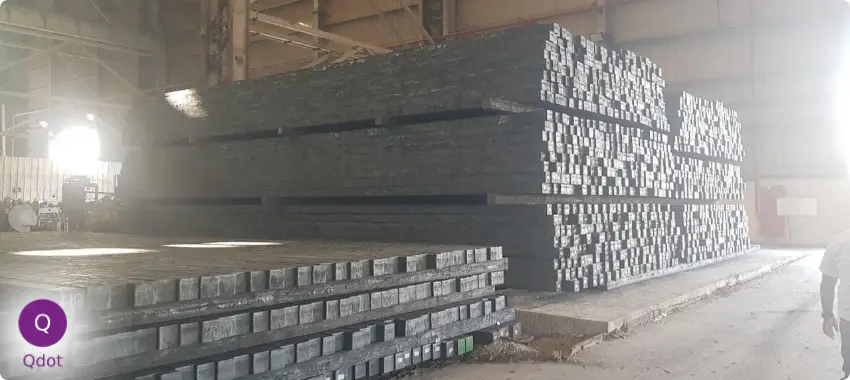
ISO 9001 certification in Ajman confirms that an organisation's quality management system (QMS) meets the requirements of ISO 9001, the international standard for quality management. An independent accredited certification body conducts the Stage 1 and Stage 2 audits and, after its certification decision, issues the certificate where the requirements are met. Qdot is an ISO consultancy: we help Ajman businesses close gaps against the standard, implement a practical QMS and prepare for the certification audit. We do not audit, approve or issue certificates.
Qdot's UAE office is in Dubai, and we support manufacturers, workshops, traders, logistics operators, contractors and service companies across Ajman.
What ISO 9001 Certification Means for Ajman Businesses
ISO 9001 sets requirements for how an organisation understands customer requirements, controls the work that affects its products and services, manages risks and opportunities, and improves based on evidence. It does not dictate how a product must be made; each organisation builds its QMS around its own processes.
Ajman has active trading, manufacturing, warehousing and technical-service sectors. Ajman Free Zone, established in 1988, provides business infrastructure including warehouses and is located close to Ajman Port. Industrial areas such as Al Jurf and Ajman Industrial also support trading, importing, exporting, workshops and related commercial activities.
For these businesses, ISO 9001 certification may be driven by customer or supply-chain requirements. Buyers, main contractors and distributors may request an accredited certificate during vendor registration, prequalification or tender submissions. ISO 9001 is not a general legal requirement in Ajman, so each customer or tender should be checked for the certificate scope and sites expected.
If your organisation is considering additional management system standards, see our ISO certification options in Ajman.
ISO 9001 for Key Industries in Ajman
The requirements are the same for every organisation. What changes is where quality problems usually start and which controls matter most.
Manufacturing, Industrial Operations and Technical Workshops
Manufacturers and workshops in Ajman often work to customer drawings or specifications, produce in batches and rely on external suppliers or subcontracted processes. A practical QMS helps establish consistent controls around materials, production, inspection and corrective action.
A practical QMS for these operations can cover:
- Supplier evaluation for raw materials, components and outsourced processes such as coating, machining or heat treatment.
- Incoming material inspection against the purchase order and specification.
- Process controls with defined parameters, work instructions where needed and first-off checks.
- In-process and final inspection with recorded acceptance criteria.
- Calibration of gauges, meters and test equipment where measurement validity affects conformity.
- Equipment maintenance where breakdowns affect product quality or delivery.
- Control of nonconforming output, including segregation, rework and customer concessions where applicable.
- Corrective action that addresses root causes, not only the defective item.
Port Logistics, Warehousing, Trading and Distribution
Import-export traders, distributors and warehouse operators, including businesses in Ajman Free Zone and around Ajman Port, remain responsible for what they supply and how it is handled even when they do not manufacture the product.
Typical QMS controls can include:
- Supplier control: evaluating suppliers and verifying purchased goods against the order and specification.
- Receiving: checking quantities, condition and documents, and recording discrepancies.
- Storage and inventory accuracy: location control, stock counts and storage conditions where products require them.
- Order verification: picking and packing checks before dispatch.
- Shipment documentation: accurate commercial and delivery documents.
- Dispatch and delivery: proof of delivery and defined handling methods.
- Traceability: by batch or lot where customers or products require it.
- Customer complaints: recording, investigating and responding consistently.
Indicators such as on-time delivery, order accuracy and complaint trends can help management evaluate service reliability and identify improvement opportunities.
Construction, Contracting and Service Businesses
Contractors, fit-out companies and MEP subcontractors often work project by project with changing teams and subcontractors. Service businesses also depend heavily on people, making consistent processes, competence and customer communication important parts of the QMS.
For contracting, the QMS can cover:
- Contract review to confirm customer requirements, specifications and capability before committing.
- Project quality controls, such as inspection and test plans and material approvals where applicable.
- Drawing and revision control so site teams use current documents.
- Subcontractor control through selection, briefing and monitoring.
- Inspections at defined stages with records and handover documentation.
For service businesses, the focus is on defining what the customer receives, staff competence and training, service consistency and complaint handling that leads to improvement.
ISO 9001:2026 and the Transition from ISO 9001:2015
ISO 9001:2026 is the current edition of the standard. ISO published it on 16 September 2026, replacing ISO 9001:2015. The revision places stronger emphasis on leadership and quality culture, aligns the quality policy more closely with the organisation's strategic direction, and gives a clearer distinction between managing risks and pursuing opportunities.
From 31 March 2028, new and initial accredited certifications may only be issued to ISO 9001:2026. Organisations already certified to ISO 9001:2015 have until 30 September 2029 to transition and do not need to restart the certification process. New ISO 9001 projects in Ajman should be planned around the current edition; confirm with your chosen certification body which edition it can currently certify against. For more detail, read our ISO 9001:2026 transition guide.
ISO 9001 Implementation and Certification Process in Ajman
Certification has two broad parts. The organisation first builds and operates its QMS, often with consultancy support. An independent certification body then audits it. Qdot supports implementation and certification readiness but does not make the certification decision.
Gap Analysis, QMS Implementation and Internal Audit
Gap analysis and planning. We compare current practices with ISO 9001, map key processes and speak with the people who do the work. The result is an implementation plan covering the proposed certification scope, including the legal entity, sites and activities, the gaps to close, responsibilities and priorities.
QMS implementation. ISO 9001 does not require every organisation to have a quality manual, a fixed set of SOPs or a fixed list of procedures. It requires the documented information required by the standard and needed for the effective operation of the QMS. How much is needed, and in what form, depends on organisation size, certification scope, process complexity, activities, staff competence and operational needs.
During implementation, Qdot helps define the quality policy, objectives and process controls, develop customised documented information and run employee awareness sessions.
Internal audit and management review. The QMS should operate long enough to produce evidence before the certification audit. We support internal audits, help plan and close corrective actions on findings, and prepare for a management review where top management evaluates system performance.
Stage 1 and Stage 2 Certification Audit
You select and contract the certification body directly. When choosing one, check that it holds appropriate accreditation for ISO 9001 and the relevant certification scope, and verify this directly with the accreditation body or through the applicable international recognition system.
- Stage 1 audit. The certification body reviews documented information, scope, site conditions and readiness, and identifies issues to resolve before Stage 2.
- Stage 2 audit. The certification body assesses whether the QMS is implemented and effective through interviews, observation and records across the certification scope.
- Findings and corrective action. Where nonconformities are raised, the organisation addresses them within the certification body's timeframe. Qdot can support cause analysis and corrective-action responses.
- Certification decision. The certification body decides whether to grant certification and, if approved, issues the certificate.
Qdot can coordinate with the certification body on scheduling and information requests, but the audit conclusions and certification decision rest entirely with the certification body.
ISO 9001 Certification Cost and Timeline Factors in Ajman
There is no fixed price or universal timeline for ISO 9001 certification. The total cost has two separate parts:
- Qdot consultancy and implementation fee for gap analysis, QMS development, awareness, internal audit support and readiness preparation, depending on the level of support required.
- Certification-body audit fee, paid directly to the independent certification body for Stage 1 and Stage 2 audits and later surveillance and recertification audits.
| Factor | Effect on cost and timing |
|---|---|
| Organisation size and employee numbers | More people and processes can mean more implementation work and longer audits. |
| Certification scope | More activities require more controls and evidence. |
| Number of sites | A free zone office, warehouse and workshop may each need coverage. |
| Process complexity | Manufacturing, design or project work can require more controls. |
| Current QMS maturity | Existing controls and records can reduce implementation work. |
| Documented information already available | Gaps can take time to address. |
| Staff availability | Implementation usually progresses faster when relevant staff can participate. |
| Corrective actions | Findings may need to be resolved before moving forward. |
| Certification-body scheduling | Audit dates depend on the certification body's availability. |
A gap analysis is a practical way to estimate an organisation-specific timeline. Qdot can provide a consultancy estimate once the scope is understood, while certification-body audit quotations should be requested directly from the selected accredited certification body.
ISO 9001 Certificate Validity and Surveillance Audits
ISO 9001 certification normally operates on a three-year certification cycle. During that cycle, the certification body conducts surveillance audits, with the first surveillance audit normally taking place within 12 months of the initial certification decision. A recertification audit is conducted before the cycle ends to continue certification.
The certification body controls surveillance scheduling and certification status and may suspend or withdraw certification when its certification requirements are not maintained. Qdot does not control certificate status, but we can support internal audits, management reviews and corrective actions between audits so the QMS remains in active use.
Qdot ISO 9001 Support in Ajman
Qdot supports Ajman organisations from our UAE office in Dubai with practical, consultant-led ISO 9001 support:
- Practical QMS implementation based on how your workshop, warehouse, trading, contracting or service operation works.
- Customised documented information sized to your scope rather than copied from a generic template.
- Employee awareness so staff understand their role in the QMS.
- Internal audit preparation, management review support and corrective-action support.
- Certification readiness and coordination with your chosen certification body, which conducts the audit and issues the certificate.
For Qdot's services across the Emirates, see our page on ISO 9001 consultancy in the UAE.
If you are preparing for ISO 9001 certification in Ajman, contact Qdot to discuss your scope, sites and current quality practices.
FAQs
ISO 9001:2026 is the current edition, published by ISO on 16 September 2026. It replaces ISO 9001:2015. Organisations certified to ISO 9001:2015 have until 30 September 2029 to transition.
An independent, accredited certification body issues the ISO 9001 certificate after auditing your quality management system. ISO develops the standard but does not certify organisations.
There is no fixed timeline. It depends on organisation size, scope, number of sites, process complexity, QMS maturity, existing documented information, staff availability, corrective actions and certification-body scheduling. A gap analysis gives an organisation-specific estimate.
The cost has two parts: the consultancy fee for implementation support and the certification body's audit fee. Both depend on employee numbers, scope, sites, process complexity, QMS maturity, the level of support required and audit duration.
ISO 9001 is a voluntary standard and is not a general legal requirement in Ajman. However, customers, main contractors and distributors may request it during vendor registration, prequalification or tenders.
Yes. ISO 9001 applies to organisations of any size. Small businesses can keep the QMS proportionate, with only the documented information required by the standard and needed to run their processes effectively.
ISO 9001 certification normally runs on a three-year cycle, subject to annual surveillance audits and recertification before the cycle ends. The certification body controls certificate validity and can suspend or withdraw certification.
An ISO 9001 consultant helps you prepare for certification through gap analysis, process mapping, QMS development, documented information, employee awareness, internal audit, management review and corrective-action support. The consultant does not conduct the certification audit or guarantee its outcome.
No. Qdot is an ISO consultancy. We support implementation and certification readiness, while your chosen accredited certification body conducts the audit, makes the certification decision and issues the certificate.
Yes. ISO 9001 applies to industrial, trading and service organisations alike. Manufacturers, workshops, traders and warehouse operators can apply it to controls such as supplier evaluation, incoming inspection, inventory accuracy, order verification and complaint handling.