
 UAE
UAE
 Qatar
Qatar
 Pakistan
 KSA
KSA
 Oman
Oman
 Kuwait
 Bahrain
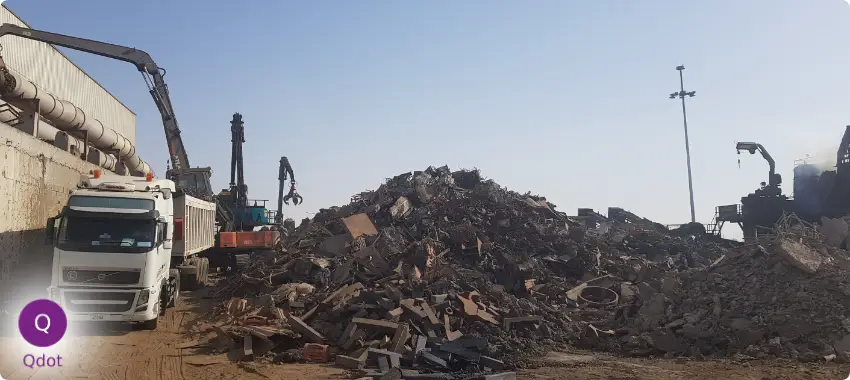
ISO 14001 certification in Ajman shows that your organisation runs an environmental management system (EMS) that meets ISO 14001 and has been assessed by an independent certification body. Qdot provides ISO 14001 consultancy in Ajman: gap analysis, environmental aspects assessment, documentation, staff training, internal audits and certification-audit preparation. The certification body carries out the external audit and issues the certificate. If you need more than one standard, this sits within our wider ISO certification in Ajman support.
What Is ISO 14001:2026?
ISO 14001 is the international standard for environmental management systems. It gives an organisation a structured way to identify its environmental impacts, meet applicable legal requirements and improve environmental performance over time.
The current edition is ISO 14001:2026, published by the International Organization for Standardization on 15 April 2026, which replaced ISO 14001:2015 and its 2024 climate-change amendment. The revision keeps the established management-system structure and focuses on clearer requirements, stronger attention to climate change, biodiversity, resources and life-cycle thinking, and better alignment with standards such as ISO 9001 and ISO 45001. You can read the announcement on the ISO website.
For an Ajman business, a useful EMS is one that reflects real operations. It should show how environmental issues are identified, controlled, monitored and improved, rather than sitting in a folder that only appears at audit time.
Why ISO 14001 Matters for Ajman Businesses
Ajman has a dense industrial and commercial base for its size, concentrated in Ajman Free Zone (AFZ), the Ajman Industrial Area, Al Jurf and the districts around Ajman Port. Manufacturing, building materials, plastics, food processing, furniture, construction and logistics are all well represented, and many of these activities have direct environmental impacts such as waste, emissions, effluent and energy use.
Ajman businesses commonly pursue ISO 14001 to:
- Meet the environmental expectations of larger buyers, main contractors and export customers
- Support supplier registration and tender or prequalification requirements
- Manage compliance with Ajman Municipality and UAE environmental regulations in a structured way
- Reduce waste, energy and resource costs through better controls
- Manage the environmental risks of manufacturing and industrial operations
- Provide independently assessed evidence of environmental responsibility
Certification does not by itself guarantee legal compliance or tender success. Its value comes from an EMS that is implemented properly and maintained after the audit.
Moving From ISO 14001:2015 to ISO 14001:2026
Global Accreditation Cooperation Incorporated (Global ACI) has published transition requirements for ISO 14001:2026 certification under its Multilateral Recognition Arrangement (MRA). The key dates are:
- Transition period: Organisations certified to ISO 14001:2015 have until 30 April 2029 to complete their transition to ISO 14001:2026.
- New and initial certifications: From 31 October 2027, new and initial accredited certifications may only be issued to ISO 14001:2026 under the applicable arrangements.
- How the transition happens: The transition audit can take place during a scheduled surveillance or recertification audit, or as a separate transition audit.
Your certification body must itself be ready to certify to the new edition, so confirm its transition plan and audit dates early rather than waiting until close to the deadline.
For an established EMS, the transition typically involves reviewing the new edition, completing a gap analysis, updating the affected documented information and assessments, briefing leadership and staff, running an internal audit and closing any gaps. Qdot can assess your current system against ISO 14001:2026, update the necessary controls and prepare your team for the transition audit.
Environmental Aspects and Controls for Ajman Businesses
An environmental aspect is any part of your activities, products or services that can interact with the environment. Identifying the significant aspects matters, because it tells you where to focus controls, objectives and monitoring. For many Ajman manufacturers and industrial operators, common aspects include:
- Waste: segregation, storage and approved disposal, with supporting records
- Effluent and water: trade-effluent controls, water consumption and leak management
- Air emissions: controls for generators, boilers, ovens, vehicles and process emissions
- Chemicals: storage, handling, labelling and access to safety data sheets
- Energy: electricity and fuel monitoring, maintenance and efficiency measures
- Spill response: containment equipment, response instructions and staff awareness
- Contractors: environmental requirements for subcontractors working on site
- Legal obligations: permits, applicable Ajman and federal requirements, and periodic evaluation
Controls should be proportionate to the operation and backed by evidence that they work in practice.
ISO 14001 requires you to identify the compliance obligations that apply to your activities, keep them up to date and periodically evaluate whether you are meeting them. In Ajman, environmental services for establishments are handled by the Ajman Municipality and Planning Department, which offers an Environmental Compliance Certificate confirming that a facility or activity meets the environmental requirements in force in the emirate, as well as site assessments for practising an environmental activity. An EMS helps you keep the records and controls these processes rely on, but it does not replace any permit, certificate or approval, and ISO 14001 certification is not proof of legal compliance.
ISO 14001 Documents and Evidence We Help Prepare
ISO 14001 requires documented information that shows the EMS is operating. The exact set depends on the organisation, but Qdot can help prepare and maintain the environmental policy, scope and objectives, the environmental aspects and impacts register, the register of legal and other obligations, risk and opportunity assessments, operational controls and work instructions, emergency preparedness arrangements, competence and training records, monitoring and measurement records, internal audit reports, management review records, and nonconformity and corrective-action records.
The documentation should match what employees actually do, which keeps the EMS easier to maintain and provides credible evidence at audit.
Our ISO 14001 Consultancy Process in Ajman
Qdot follows a structured implementation process:
- Gap analysis. Review current practices against ISO 14001:2026 and identify the actions required.
- Aspects and obligations review. Record environmental aspects, significant impacts and applicable obligations.
- EMS planning. Define the scope, policy, objectives, responsibilities and controls.
- Documentation. Develop the documented information, operational controls and records the EMS needs.
- Training and implementation. Explain responsibilities and help teams apply the controls in daily work.
- Internal audit. Check whether the EMS is implemented and identify improvements before the external audit.
- Management review and corrective action. Support leadership review and closure of remaining gaps.
- Certification readiness. Prepare the system and team for the audit and coordinate with the selected certification body.
How ISO 14001 Applies Across Ajman Industries
ISO 14001 can be adapted to any size or sector. In Ajman it is commonly applied in:
- Manufacturing in Ajman Free Zone and the Ajman Industrial Area: process emissions, chemical storage, resource use and production waste. Typical controls include bunded chemical storage, segregated waste streams with licensed collection records, and monitoring of stack or generator emissions where relevant.
- Building materials and fabrication in Al Jurf and other industrial areas: dust, noise, cutting and coating residues, and scrap. Controls include dust suppression, covered material storage, and segregation of metal, wood and hazardous waste.
- Construction and contracting: dust, waste, water use and subcontractor controls. Site environmental plans, skip segregation, wash-water management and contractor briefings help keep controls consistent across projects.
- Logistics and warehousing near Ajman Port: fuel use, vehicle emissions, packaging and spill response. Controls include fuel and oil spill kits at loading areas, drip trays for stored drums, vehicle maintenance records and packaging recovery.
- Food production: effluent, waste and hygiene-related environmental controls, such as grease trap maintenance, organic waste segregation and cleaning-chemical management.
- Facilities and services: energy, water and waste controls across managed properties, supported by meter readings and consumption targets.
The EMS scope and controls should reflect the activities and environmental conditions of each organisation.
ISO 14001 Consultancy Cost and Timeline in Ajman
There is no fixed price or schedule that fits every organisation. The total usually has two independent parts: Qdot's consultancy fee and the certification body's audit fee. Consultancy cost is influenced by organisation size, the number and location of sites, the complexity of activities and environmental aspects, the maturity of any existing system, and whether ISO 14001 is being integrated with another standard.
The timeline depends on the same factors, plus staff availability, implementation progress, internal-audit findings and the time needed to close corrective actions. Qdot provides a tailored proposal after reviewing your scope, and the certification body quotes its audit separately.
Integrating ISO 14001 With ISO 9001 and ISO 45001
ISO 14001, ISO 9001 and ISO 45001 share a compatible structure, so an organisation can combine common elements such as document control, competence, internal audits, corrective actions and management review. Many Ajman manufacturers and contractors run all three together as one system. If you already operate a quality or health-and-safety system, Qdot can integrate environmental management with it. Learn more about our ISO 9001 certification in Ajman and ISO 45001 certification in Ajman, or a single integrated management system.
Who Issues the ISO 14001 Certificate?
ISO develops the standard but does not certify organisations. An independent certification body audits the EMS and decides whether to issue the certificate, and Qdot provides the consultancy that prepares you for that audit. An accreditation body confirms that a certification body is competent for a defined scope. Global Accreditation Cooperation Incorporated (Global ACI) administers an international recognition arrangement among accreditation bodies. When choosing a certification body, verify that its accreditation scope covers ISO 14001 and that the accreditation is appropriately recognized.
The certification audit has two stages. Stage 1 reviews your documented EMS information and whether you are ready for the full audit. Stage 2 assesses whether the EMS is implemented and effective in practice. The certification body conducts both stages and makes the certification decision; Qdot's role is consultancy and preparation, not auditing or certifying.
Why Choose Qdot for ISO 14001 Consultancy in Ajman
Qdot focuses on an EMS that fits your operations and can be maintained by your own team. Our support includes practical guidance based on your activities and environmental aspects, implementation aligned with ISO 14001:2026, training that helps employees understand their responsibilities, internal-audit and corrective-action support before certification, and clear project scoping. Qdot's listed UAE office is in Dubai, and its consultancy services cover organisations operating across Ajman.
Speak to Qdot About Your ISO 14001 Project in Ajman
If you are planning ISO 14001 certification or transitioning to ISO 14001:2026, Qdot can help you build a practical EMS and prepare for the audit.
FAQs
An ISO 14001 consultant helps an organisation design, implement and prepare an EMS for certification. Qdot's support includes gap analysis, environmental-aspect assessment, documentation, training, internal audits and corrective actions. The certification decision is made by an independent certification body.
Yes. ISO 14001:2026 replaced the 2015 edition on 15 April 2026. It keeps the established EMS framework while clarifying requirements and strengthening attention to climate change, biodiversity, resources and life-cycle thinking.
No, but plan early. Under Global ACI transition requirements, organisations certified to ISO 14001:2015 have until 30 April 2029 to transition, which can happen at a surveillance, recertification or separate transition audit. From 31 October 2027, new and initial accredited certifications may only be issued to ISO 14001:2026. Confirm your audit timing with your certification body.
Cost depends on organisation size, sites, activities, environmental risks, existing system maturity and the support required, and it includes separate consultancy and certification-body fees. Qdot reviews the scope before quoting.
It depends on the size and complexity of the organisation, existing controls, staff availability and the corrective actions found during implementation. Qdot can give a realistic schedule after an initial assessment.
An accredited certification body issues the certificate after auditing the EMS. Qdot is a consultancy and does not issue certificates.
Yes. ISO 14001 can be applied to any size of organisation. The EMS should be proportionate to the business's activities, environmental aspects and obligations.
Yes. The three standards share a common structure, so they can run as one integrated management system while each standard's specific requirements are still met.