
 UAE
UAE
 Qatar
Qatar
 Pakistan
 KSA
KSA
 Oman
Oman
 Kuwait
 Bahrain
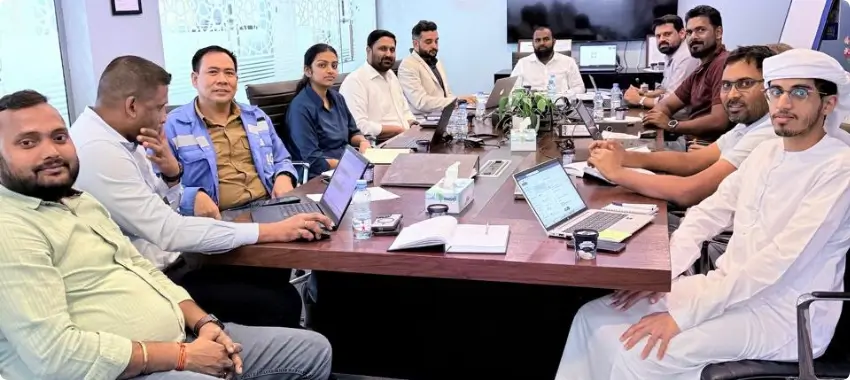
ISO 50001 consultancy in the UAE helps an organisation develop, implement and prepare an Energy Management System (EnMS) before an independent certification body audits it. Qdot International is a management-systems consultancy in Dubai. We support gap analysis, energy review, energy baselines and EnPIs, documentation, implementation, training, the internal-audit programme, management review, corrective action and certification readiness.
Qdot does not conduct the certification audit, issue certificates or take part in the certification decision. Those responsibilities belong to the independent certification body appointed by the organisation.
What is ISO 50001?
ISO 50001:2018 is the international standard for energy-management systems. It provides a framework for establishing, implementing, maintaining and improving an EnMS so energy performance is managed systematically rather than through isolated actions. The standard applies to organisations of different sizes and sectors and does not prescribe particular technologies.
For external audit stages, certification-body selection, certificate validity and audit cost factors, see how ISO 50001 certification works in the UAE.
What is Qdot's role, and what does the certification body do?
| Qdot consultancy support | Independent certification body |
|---|---|
| Assesses gaps against ISO 50001:2018. | Audits the EnMS against ISO 50001:2018. |
| Supports EnMS development, documentation and implementation. | Does not design or document the organisation's system. |
| Provides training and supports the internal-audit programme. | Conducts the Stage 1 and Stage 2 external audits. |
| Supports readiness and corrective action. | Makes the certification decision and issues the certificate. |
Who may need ISO 50001 consultancy?
Consultancy is useful when an organisation needs additional expertise or implementation capacity. It may be appropriate when:
- energy is a material cost or emissions driver, but responsibility for energy performance is not clearly assigned;
- consumption data exists, but there is no defined approach to baselines or relevant variables such as production volume, occupancy or ambient temperature;
- a customer, contractor, financier, tender or group policy requests ISO 50001;
- ISO 50001 needs to be integrated with ISO 9001, ISO 14001 or ISO 45001;
- several sites require a consistent EnMS method; or
- an earlier implementation created documents that are not used in daily operations.
An organisation with an experienced energy manager, suitable metering and established management-system processes may require a narrower scope, such as gap analysis, technical review or internal-audit support.
Consultancy cannot replace top-management commitment, missing operational decisions, unavailable energy data or an unclear EnMS scope. Those matters must be resolved by the organisation that will own and operate the system.
What happens during an ISO 50001 gap analysis?
Qdot assesses the current system against ISO 50001:2018 and the evidence that an external auditor is likely to expect. The assessment identifies what is already in place, what is missing and what needs revision, and it proposes an order for the implementation work.
Where suitable ISO 9001, ISO 14001 or ISO 45001 processes already exist, they may be reused or extended instead of creating parallel arrangements. This can reduce duplicated documentation and implementation effort.
How are the energy review and significant energy uses developed?
The energy review is the technical foundation of the EnMS. Qdot works with the organisation to examine energy sources and consumption, analyse energy use by process, system, equipment and facility, identify significant energy uses using defined criteria, determine the variables that affect them, assess current energy performance and prioritise improvement opportunities.
Depending on the operation, this may include chillers and HVAC plant, compressed air, motors and drives, pumps, refrigeration and cold storage, lighting, process heat and standby generation. The review follows the actual operation rather than a generic equipment checklist.
The number of significant energy uses and energy types identified may also influence how the certification body calculates audit time under ISO 50003. A well-supported energy review therefore helps both the EnMS and the later certification quotation.
How are energy baselines and EnPIs established?
Qdot supports the establishment of energy baselines using a suitable data period and a documented method so that later comparisons can be explained and evidenced.
We then help define energy performance indicators (EnPIs) relevant to what the organisation can influence. Where variables such as production volume, occupancy, weather or operating hours materially affect consumption, the method for accounting for those variables needs to be defined and recorded. Comparing raw consumption across unlike operating periods can otherwise produce misleading results.
This work also considers the monitoring and measurement plan: what will be measured, how often, by whom, with which instrument or data source, and where the results will be reviewed.
What EnMS documentation and implementation support are included?
Scope and boundaries
We help define the sites, activities, processes and energy types included in the EnMS. The organisation must have authority to control energy performance within that scope and must not exclude an energy type used inside it. Significant energy uses are then determined within the established scope and boundaries.
Documented information
Depending on the agreed scope, Qdot prepares or revises documented information such as the EnMS scope, energy policy, responsibilities, context and interested parties, energy review and significant-energy-use records, baseline and EnPI methods, objectives, action plans, operational controls, design and procurement criteria, competence records, internal-audit arrangements and management-review structure.
Implementation
Documents alone do not demonstrate an effective system. Qdot supports the organisation in moving from a documented system to an operating one: embedding operating criteria into maintenance and production routines, establishing consistent data collection, tracking action plans and applying energy-performance considerations to relevant procurement and design decisions.
What training is available for the internal team?
We provide ISO 50001 awareness training so managers, engineers, technicians and operators understand their roles in the EnMS. We also provide ISO 50001 internal auditor training for organisations that want to build internal audit capability.
Building this capability is useful because internal audits continue throughout the certification cycle, not only before the initial external audit.
How are internal audit and management review supported?
Qdot supports the internal-audit programme so the EnMS is reviewed before the external audit and the organisation has time to address its own findings. When Qdot personnel conduct an internal audit, responsibilities are assigned to maintain auditor objectivity and avoid auditing their own work.
We also support management review by helping prepare the required inputs, structure the agenda and record decisions, actions and resource commitments. The organisation's top management remains responsible for conducting the review and deciding how the EnMS will be directed.
What does corrective-action and audit-readiness support cover?
Qdot helps the organisation analyse the causes of findings, define corrections and corrective actions, assign responsibilities and review whether actions have been effective.
Before certification, we conduct a readiness review and can support the evaluation of certification bodies based on accreditation scope, sector competence and commercial requirements. Subject to the certification body's rules, Qdot can provide coordination support during the external audit, while the organisation remains responsible for presenting its evidence and answering the auditors' questions. We can also support cause analysis and corrective action for audit findings within the timeframe set by the certification body.
Can the consultancy be delivered onsite and remotely?
The onsite and remote mix is agreed for each engagement. Documentation development and record review can often be handled remotely. Site attendance may be necessary when the work depends on direct observation, such as plant walk-throughs, energy-review validation, significant-energy-use assessment, implementation checks or internal audits.
For multi-site organisations, the work also considers how the EnMS is applied consistently at different locations. Certification bodies use defined multi-site sampling rules, so differences between local practices need to be identified before the external audit.
What affects the ISO 50001 consultancy timeline?
The duration depends on the agreed scope and the organisation's starting position. Important variables include:
- the number of sites and how comparable their operations are;
- the quality of existing energy data and metering;
- the maturity of existing management-system processes;
- the availability of internal personnel;
- the operating history needed before external audit; and
- how quickly decisions about scope, targets and resources are made.
A major timeline factor is the period needed for the EnMS to operate and generate records that demonstrate implementation.
What affects ISO 50001 consultancy cost?
Consultancy fees are separate from certification-body fees and any investment the organisation chooses to make in metering, controls or equipment. Qdot prices the engagement against an agreed scope. Cost factors include:
- the number and location of sites;
- energy-use complexity and significant energy uses;
- the amount of usable documentation already available;
- the volume and condition of energy data;
- integration with existing management systems; and
- awareness and internal-auditor training requirements.
Building ISO 50001 on suitable ISO 9001 or ISO 14001 processes can reduce duplication through shared document control, corrective action, internal audit and management review arrangements. The gap analysis determines which existing processes can be reused.
What UAE experience can Qdot demonstrate?
Qdot's AGSI integrated management system case study describes a UAE steel-sector engagement that began with an ISO 50001 EnMS integrated with the organisation's existing ISO 9001 framework. It covers the energy review, significant energy uses, baselines, EnPIs, operational controls and management-review arrangements, while identifying the independent certification body's separate role.
FAQs
An ISO 50001 consultant provides advisory support for gap analysis, energy review, significant energy uses, energy baselines, EnPIs, EnMS documentation, implementation, training, the internal-audit programme, management review, corrective action and certification readiness. Your organisation remains responsible for owning and operating its EnMS.
No. Qdot is a consultancy and cannot issue, award or approve certification. An independent certification body audits the EnMS and makes the certification decision.
An existing management system should provide established processes for document control, internal audit, corrective action and management review, although their suitability for the EnMS should be checked. Consultancy may then focus on the technical energy-planning requirements and integration. A gap analysis determines the work actually required.
Partly. Documentation and record reviews can often be completed remotely. Site observation may be needed for plant walk-throughs, energy review, significant-energy-use assessment, implementation checks and internal audit. The onsite and remote mix is agreed for each engagement.
Using a consultant does not by itself prevent certification, but the consultancy relationship must be declared so the certification body can manage impartiality risks. Your own team must understand and operate the EnMS.
Consultancy cost depends on the number and location of sites, energy-use complexity, significant energy uses, the condition of existing documentation and energy data, integration with other systems and the training required. Consultancy fees are separate from certification-body audit fees.
Qdot can support the internal-audit programme. When Qdot personnel conduct an audit, responsibilities are assigned to maintain objectivity and avoid auditing their own work. Qdot also provides internal-auditor training for organisations building this capability internally.