
 UAE
 Qatar
 Pakistan
 KSA
 Oman
 Kuwait
 Bahrain
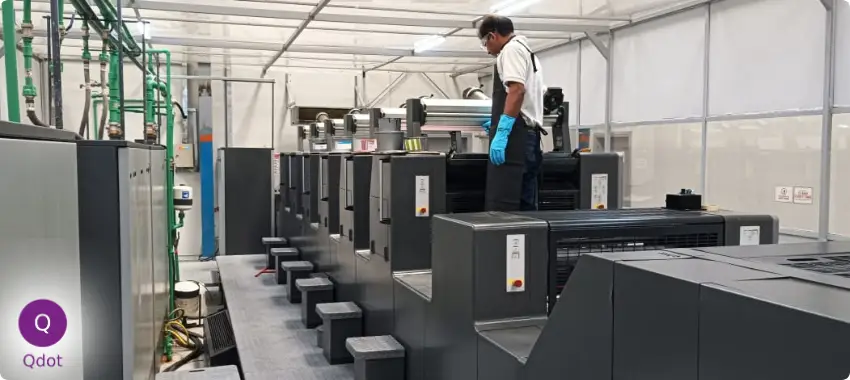
GMP certification in Fujairah helps eligible manufacturers demonstrate that their operations follow applicable Good Manufacturing Practices (GMP). Depending on the product and applicable requirements, compliance may be assessed through third-party certification, customer audits or regulatory inspections. GMP covers controls over premises, people, materials, processes and records that help businesses maintain product safety and consistent quality.
The GMP framework that applies depends on what you make, how you make it and where you sell it. A cosmetics producer may work to ISO 22716, a food manufacturer to food hygiene and HACCP requirements, and a medicines manufacturer to regulatory GMP overseen by the Emirates Drug Establishment.
Qdot is a GMP consultancy. We help Fujairah businesses identify the right framework, close the gaps, train their teams and prepare for the certification audit or regulatory inspection. Where applicable, a certificate or regulatory approval is issued by the independent certification body or competent authority, not by Qdot.
What GMP Certification Means for Fujairah Businesses
Good Manufacturing Practices define how products should be manufactured, handled and stored to protect product safety and quality. A GMP system covers production area layout, raw material handling, cleaning and sanitation, equipment maintenance, calibration, pest control, staff hygiene, traceability and record keeping.
GMP is not only paperwork. It requires real controls, trained staff and maintained records that can be reviewed during an inspection or certification audit. Retailers, importers and brand owners often ask for GMP evidence during supplier approval, and a working system reduces the risk of contamination, quality failures and regulatory problems across your supply chain.
It helps to separate four things that are often grouped together as "GMP certification":
| Activity | Who carries it out | What it produces |
|---|---|---|
| GMP implementation | Your organisation, often with consultancy support | Working controls, procedures and records |
| Third-party certification | An independent certification body | A certificate against a defined standard or scheme, where one is available |
| Customer or second-party audit | A buyer, brand owner or their appointed auditor | Supplier approval under the customer's own criteria |
| Regulatory inspection | The competent authority for the product type | A licence, approval or good practice certificate where the law requires one |
There is no single universal GMP certificate that every Fujairah manufacturer must hold. Requirements differ because product risks differ: a contaminated medicine, a spoiled food product and a poorly preserved cream each fail in different ways, so each sector has its own GMP expectations. Some businesses need regulatory approval, others need voluntary certification to satisfy customers, and some need both.
Which GMP Requirements Apply to Your Industry?
Start with your product. The sections below explain the main GMP frameworks relevant to Fujairah manufacturers and how certification or approval works for each.
Cosmetics and Personal Care GMP — ISO 22716
ISO 22716:2007 is the international guideline for Good Manufacturing Practices in cosmetics. It covers the production, control, storage and shipment of cosmetic products. ISO last reviewed and confirmed the standard in 2022, so the 2007 edition remains current. It does not cover research and development, the distribution of finished products, personnel safety or environmental protection.
ISO 22716 applies to cosmetic products, not to food or medicines. Whether a personal-care item such as a soap, sanitiser or oral-care product falls under cosmetics GMP depends on how it is classified for regulatory purposes, so confirm the classification before choosing the framework.
Typical implementation requirements include:
- Defined responsibilities and trained personnel, including hygiene rules for production staff
- Premises and equipment designed for cleaning, with controlled flows to prevent mix-ups and contamination
- Approval of raw materials and packaging suppliers, with incoming checks
- Written production instructions and batch records for each lot
- Quality control testing, release of finished products and retained samples
- Handling of out-of-specification results, deviations, complaints and recalls
- Change control, internal audits and document control
Many certification bodies offer ISO 22716 audits. Because ISO 22716 is written as guidance, check whether the certification scheme is accredited and whether your customer or export market accepts it before you commit to an audit. Qdot supports cosmetics and personal-care manufacturers with gap assessment, documentation, training and audit readiness through our ISO 22716 GMP consultancy.
Food Manufacturing GMP and HACCP Requirements
In food production, good manufacturing and good hygiene practices are the foundation of food safety. They are often called prerequisite programmes: the basic conditions and activities that keep the production environment hygienic before any specific hazard is controlled.
For a Fujairah food business, these prerequisite controls typically cover:
- Hygienic premises, drainage, water supply and waste handling
- Cleaning and sanitation of equipment and food-contact surfaces, with verified schedules
- Personal hygiene, health checks and protective clothing for food handlers
- Separation of raw and finished products, and allergen control
- Pest management by trained staff or a licensed contractor
- Temperature control for chilled and frozen products
- Supplier approval and traceability of ingredients and packaging
HACCP (Hazard Analysis and Critical Control Points) builds on these foundations. It identifies the biological, chemical and physical hazards specific to your process and sets critical limits, monitoring and corrective actions at the steps that control them. ISO 22000 goes a step further, combining prerequisite programmes and HACCP within a certifiable food safety management system. If your customers ask for these, see our pages on HACCP certification in Fujairah and ISO 22000 certification in Fujairah.
Keep two obligations separate. Food businesses must meet the licensing and food-control requirements of the competent authorities, and Fujairah Municipality's inspection teams inspect food establishments in the emirate. Those obligations apply whether or not you hold a certificate. Third-party GMP, HACCP or ISO 22000 certification is a voluntary step, usually driven by retailers, export buyers or brand owners.
Pharmaceutical and Medical Product GMP Requirements
Pharmaceutical GMP is stricter and more prescriptive than food or cosmetics GMP. It is a regulatory requirement for manufacturers of medicines, not a voluntary certificate.
In the UAE, Federal Decree-Law No. 38 of 2024 regulates medical products, the pharmacy profession and pharmaceutical establishments. Under this law, the Emirates Drug Establishment (EDE) is the federal authority for medical product approvals, establishment licensing and good practice certificates, and it inspects pharmaceutical facilities. Certain supplements and products with medicinal claims may also fall within EDE-regulated categories. The applicable requirements should be confirmed through product classification and current regulatory guidance.
For these operations, compliance is demonstrated through the EDE's licensing and inspection process. A voluntary third-party certificate does not replace regulatory approval. Qdot can support readiness work, such as gap assessments, documentation, training and internal audits, but approval decisions rest entirely with the EDE.
Who Needs GMP Certification in Fujairah?
GMP controls may be relevant to businesses that manufacture, process, pack or store products where contamination or quality failure could harm consumers. Whether you need formal certification or approval depends on your products, your regulator and your customers.
Common candidates in Fujairah include:
- Food and beverage producers: processors, bakeries, bottled water and beverage plants, and central production kitchens
- Cosmetics and personal-care manufacturers: including contract manufacturers filling products for brand owners
- Supplement and nutraceutical producers: subject to regulatory requirements as well as customer expectations
- Packaging operations: companies repacking food ingredients or producing food-contact or cosmetic packaging
- Pharmaceutical and medical-product operations: where EDE licensing and inspection apply
- Warehouses and cold stores: those storing or repacking food, cosmetics or health products for customers who require GMP or good storage practices
- Suppliers facing customer audits: businesses whose buyers, export markets or retail partners make GMP a condition of supply
Fujairah's business environment shapes how GMP applies. Fujairah Free Zone sits next to the emirate's seaport and near Fujairah International Airport, and licensing in the emirate covers manufacturing, trading and warehousing, including the storage and packaging of goods. Mainland industrial areas such as Al Hayl host factories, workshops and warehouses. For example, GMP requirements may arise in operations such as:
- A free zone company repacking imported food ingredients into retail packs for UAE supermarkets
- A contract manufacturer producing creams or shampoos for a brand owner who requires ISO 22716 evidence
- A beverage plant supplying distributors who audit hygiene and traceability controls
- A warehouse storing supplements or cosmetics for a distributor that asks for documented storage and handling controls
Not every port, logistics or chemical business needs GMP. The question is whether your activities affect the safety or quality of a product covered by a GMP framework, regulator or customer requirement.
Key GMP Requirements We Help You Implement
GMP covers both operational controls and documentation. The table below shows what a manufacturer usually needs to put in place and what an auditor or inspector typically expects to see. The exact requirements depend on the framework that applies to you.
| GMP requirement | What you implement | What the auditor usually checks |
|---|---|---|
| Facility layout and controlled environments | Defined flows for people, materials and waste, with segregated zones where needed | Site walk-through, zoning, condition of surfaces, drains and lighting |
| Cleaning, sanitation and personal hygiene | Cleaning schedules, approved chemicals, hand-washing points, protective clothing rules | Completed cleaning records, staff behaviour on the floor, hygiene training |
| Equipment maintenance and calibration | Planned maintenance and calibration of scales, thermometers and measuring devices | Maintenance logs, calibration certificates, labels showing status |
| Raw-material and supplier controls | Approved supplier list, specifications, incoming inspection | Supplier approvals, certificates of analysis, rejected-goods records |
| Standard Operating Procedures (SOPs) | Clear, controlled instructions for critical tasks | Current versions in use at the workstation, staff able to explain them |
| Production records and batch traceability | Batch or lot records linking materials, process data and finished goods | A trace exercise from a finished product back to its raw materials |
| Personnel competence and training | Role-based training plans, induction and refresher sessions | Training records matched to the tasks people actually perform |
| Storage and handling controls | Temperature monitoring, stock rotation, segregation of quarantined goods | Storage conditions, temperature logs, labelling of held stock |
| Nonconformities and corrective actions | A process to record deviations, investigate causes and fix them | Deviation records, root-cause analysis, evidence the fix worked |
| Internal inspections and audit evidence | Scheduled internal reviews or audits where required | Audit reports, closed findings and oversight records appropriate to the framework |
Pest prevention and control are common elements of food and cosmetics GMP programmes, with measures and records appropriate to the facility and applicable requirements.
A practical example: if an auditor selects a finished batch, you should be able to show which raw-material lots went into it, who produced it, which equipment was used and cleaned, what checks were passed and where the batch was shipped. If that trace takes hours or relies on memory, the system needs work.
GMP Certification Process in Fujairah
The route to certification or approval usually follows these steps:
- Identify the framework and scope. Confirm which GMP requirements apply, for example ISO 22716, food hygiene and HACCP requirements, or EDE pharmaceutical GMP, and which sites, products and processes fall within scope.
- Gap analysis. Assess your facility, controls and records against those requirements to identify what needs to be developed or improved.
- Develop and implement controls. Put the required procedures, SOPs, batch records, traceability procedures and hygiene controls into daily use.
- Train personnel and build records. Train your team on their responsibilities and run the system long enough to generate real evidence.
- Internal audit and readiness review. Check how well the system works, then plan and close corrective actions.
- External assessment. The certification body audits your system, or the competent authority inspects your facility, depending on the framework.
- Close findings and receive the decision. Address any nonconformities within the required timeframe. The certification body or authority then makes its decision.
Qdot's role covers steps 1 to 5, plus support in responding to findings: consultancy, implementation support, documentation, training and audit preparation.
The certification body's or authority's role covers the formal assessment and the certification or regulatory decision.
Audit stages differ between schemes. ISO 22000 certification normally uses a two-stage audit, ISO 22716 audits depend on the certification body's scheme, and EDE inspections follow the authority's own procedures. Qdot confirms the expected route once the framework is agreed.
How Qdot Helps You Prepare for GMP Certification
Qdot is a GMP consultancy, not a certification body or regulator. We prepare your business so that your team, documents and controls are ready for assessment. Our support includes:
- Initial GMP readiness assessment: a site review against the applicable framework, with a prioritised gap report
- Documentation and operational gap identification: showing where written procedures, records or practice fall short
- SOP and documentation support: SOPs, batch records, quality control procedures, cleaning schedules and forms sized to your operation
- GMP implementation guidance: practical help putting controls into production, processing, raw-material handling and storage areas
- Personnel awareness and training: GMP training at operational and management levels
- Internal audit preparation: an internal audit that tests the system before the external assessment
- Corrective-action support: root-cause analysis and action plans for internal or external findings
- Preparation for third-party audits or regulatory inspections: management review support, a final readiness check and guidance on what the assessor will ask for
GMP Certification Cost and Timeline in Fujairah
There is no fixed price or standard timeline for GMP certification in Fujairah. Both depend on the framework, the facility and how much of the system already exists.
What Affects GMP Certification Cost?
The main cost factors are:
- The applicable GMP framework: pharmaceutical GMP usually needs more work than a small food or cosmetics operation
- Facility size and operational complexity: more production lines, shifts and staff mean more controls and evidence
- Number of sites and production processes: each site or process in scope needs implementation and assessment
- Product types and risks: high-risk products such as chilled foods, sterile products or allergen-containing lines need tighter controls
- Existing documentation and system readiness: a site with working records needs less development
- Training and implementation support: the depth of hands-on support you need from a consultant
- Independent assessment or regulatory inspection fees: set by the certification body or authority
- Corrective actions or additional assessments: facility changes or follow-up visits can add cost
Consultancy fees and certification or regulatory fees are usually separate, although the arrangement depends on the engagement and the scheme. Qdot provides an assessment-based quotation once we understand your products, processes and scope.
How Long Does GMP Certification Take?
Project duration depends on:
- Your starting level of readiness
- The condition of the facility and any changes needed
- How complete your existing documentation is
- The amount of training required
- The complexity of your processes
- Findings that need corrective action
- Availability of certification body auditors or regulatory inspections
There are two timing components to consider: implementation readiness and the external certification or regulatory assessment. Their scheduling and duration depend on the applicable process. Qdot can provide a realistic estimate for its implementation support after an initial readiness assessment.
Why Choose Qdot for GMP Consultancy in Fujairah?
Qdot supports businesses in Fujairah and across the UAE from our UAE office in Dubai, and also serves clients in Qatar, Saudi Arabia, Oman, Bahrain, Kuwait and Pakistan. Our consultants work directly with your team from the initial assessment through documentation, training, internal audit and audit-day preparation.
- Practical implementation guidance: controls built around how your production floor actually works
- Documentation and training support: SOPs, records and training sized to your operation, not copied from a template
- Industry-specific consultancy: support for food, cosmetics, supplement and pharmaceutical-related operations
- Clarity on applicable requirements: help working out which GMP framework, certification or approval you actually need
- Audit preparation: internal audits, corrective actions and readiness checks before the external assessment
- Clear roles: we prepare your system, while the certification body or authority makes the decision
If your business needs related certifications, Qdot also provides support for ISO certification in Fujairah and other food safety and quality management standards.
Request GMP Consultancy and Audit Readiness Support
Tell us what you produce, where your facility is and which customers or regulators you need to satisfy. Qdot will help you confirm the GMP requirements that apply, arrange an implementation readiness assessment and prepare a quotation based on your facility and scope.
FAQs
GMP certification in Fujairah helps eligible businesses demonstrate compliance with applicable Good Manufacturing Practices. Depending on the product and requirements, evidence may involve third-party certification, customer audits or inspection and approval by a competent authority.
Food and beverage producers, cosmetics and personal-care manufacturers, supplement producers, packaging operations and pharmaceutical-related businesses most often need GMP. Some need it because of regulatory requirements, while others need it because customers, retailers or export markets require it as a condition of supply.
Yes, ISO 22716:2007 is the international GMP guideline for cosmetic products, covering production, control, storage and shipment. It does not apply to food or medicines. Confirm that your products are classified as cosmetics and that your customers accept the certification scheme you choose.
There is no fixed price. The cost depends on the GMP framework, facility size, number of sites and processes, product risk, current readiness and the level of support required. Consultancy fees and certification or regulatory fees are usually separate. Qdot provides a quotation after an initial readiness assessment.
There is no fixed timeline. It depends on your starting readiness, facility condition, documentation, training needs, process complexity and any corrective actions. The certification body's or authority's scheduling and decision time is separate from your implementation time.
Common documents include SOPs, batch or production records, supplier approvals, cleaning schedules, pest control records, training records, calibration and maintenance logs, deviation and corrective action records, and internal audit reports. The exact list depends on the GMP framework that applies.
Qdot provides consultancy only. We support gap assessment, documentation, implementation, training, internal audit and readiness. GMP certificates are issued by independent certification bodies, and regulatory GMP approvals are granted by the competent authority, such as the Emirates Drug Establishment for medical products.