
 UAE
UAE
 Qatar
Qatar
 Pakistan
 KSA
KSA
 Oman
Oman
 Kuwait
 Bahrain
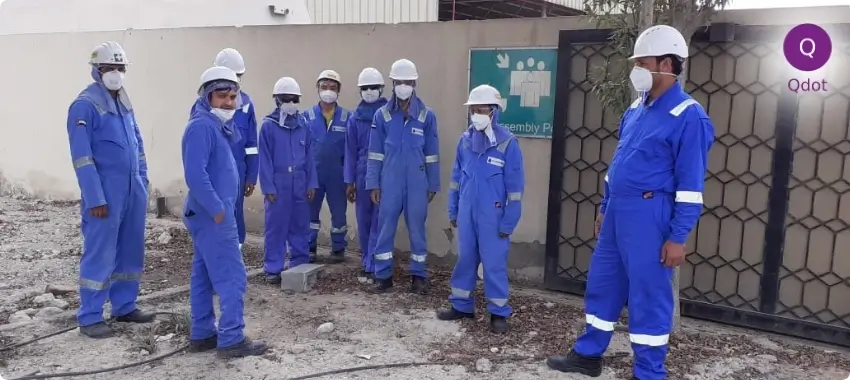
ISO 14001 certification in Sharjah confirms that an organisation runs a working Environmental Management System (EMS) built to the ISO 14001 standard. A Sharjah business earns it by setting up the EMS and then passing a two-stage audit carried out by an independent certification body. Qdot supports Sharjah-based companies through the preparation stages, including gap analysis, documentation, staff training, internal audit, and audit readiness, so the system is complete and workable before the certification audit takes place.
Sharjah is one of the UAE's fastest-growing industrial and commercial centres, with expanding activity in manufacturing, logistics, oil and gas, and construction. As these sectors grow, controlling environmental impact, including pollution, waste, emissions, and resource use, has become a core operational requirement. ISO 14001 gives organisations in Sharjah a structured way to manage that impact, meet Sharjah Municipality and wider UAE environmental regulations, and support the sustainability goals set out in UAE Vision 2031.
Qdot's ISO 14001 work in Sharjah is part of its wider ISO 14001 consultancy in UAE, so businesses operating across several emirates can keep one consistent approach while this page focuses on Sharjah-based certification.
ISO 14001:2026: what Sharjah businesses need to know
The current edition is ISO 14001:2026. Organisations seeking ISO 14001 certification in Sharjah should build their Environmental Management System (EMS) according to the latest edition. Existing ISO 14001:2015 certified organisations should plan their transition within the applicable transition period in coordination with their certification body.
The transition requires organisations to review EMS processes, environmental risks, objectives, operational controls, documented information, internal audits, and continual improvement practices. Qdot supports Sharjah businesses with ISO 14001:2026 transition planning, gap assessment, EMS updates, implementation support, and certification readiness.
For a detailed explanation, see our ISO 14001:2026 transition guide for UAE businesses.
What ISO 14001 Certification Means
ISO 14001 is an internationally recognised standard developed by the International Organization for Standardization (ISO). It sets out the framework for an Environmental Management System — the policies, processes, and controls an organisation uses to identify, manage, and reduce the environmental impact of its operations while improving efficiency and regulatory compliance.
ISO publishes the standard, but it does not certify companies. Certification is granted by an independent certification body after it audits your management system. For a Sharjah organisation, achieving ISO 14001 means stronger resource management, less waste, and documented evidence of environmental responsibility that aligns with Sharjah Municipality and UAE environmental requirements.
Why ISO 14001 Matters for Sharjah Businesses
Sharjah's industrial growth brings real environmental responsibility. ISO 14001 helps businesses manage waste, emissions, and energy use in a controlled, auditable way, while staying aligned with UAE environmental laws and the sustainability direction of UAE Vision 2031.
Beyond compliance, a working EMS builds trust with clients, investors, and regulators, and can reduce operating costs through better resource efficiency. For companies competing for contracts in and around Sharjah, that combination of lower environmental risk and demonstrated accountability is increasingly a business advantage.
What ISO 14001 Consultants in Sharjah Do
ISO 14001 consultants guide an organisation through each stage of preparing for certification. The work usually starts with a gap analysis of current environmental practices, then moves into designing an EMS that fits the company's actual activities and sites in Sharjah.
Consultants help with documentation, staff training and awareness, and internal audits, and they run pre-certification checks so issues are fixed before the external audit. Their role is preparation and readiness — the certification decision still rests with the independent certification body.
Qdot's ISO 14001 Certification Process in Sharjah
Qdot follows a structured, transparent process so Sharjah organisations reach certification readiness in a sustainable way.
- Gap analysis: A review of current environmental management practices to identify gaps against ISO 14001 and set priorities.
- System development: Building the EMS — scope, environmental aspects, controls, and documented information — around real operations.
- Training and awareness: Sessions that help employees understand the EMS and support a culture of environmental responsibility.
- Internal audit: Internal audits to test how well the system works before the external stage.
- Certification audit: An independent certification body audits the EMS. When the audit is successful, that body awards the ISO 14001 certificate, which is valid for three years before renewal.
- Pre-certification support: Checking documentation, resolving nonconformities, and preparing the organisation for the external audit.
- Post-certification assistance: Ongoing support for surveillance audits, system updates, and performance reviews.
Cost of ISO 14001 Certification in Sharjah
The cost of ISO 14001 certification depends on the size of the organisation, the complexity of its operations, and how developed its current environmental controls already are.
Qdot provides consultancy packages tailored to small, medium, and large enterprises, covering documentation, training, audit preparation, and post-certification support. For an accurate figure, request a scope-based quote rather than relying on a fixed price, and remember that the certification body's audit fees are charged separately from consultancy support.
Validity and Renewal
An ISO 14001 certificate is valid for three years. During that period, the certification body carries out annual surveillance audits to confirm the EMS is still being maintained. At the end of the cycle, a recertification audit is needed to renew it.
Qdot supports Sharjah businesses through surveillance and renewal so the system stays current and compliant over time.
ISO 14001 Training in Sharjah
Training helps an organisation implement and maintain its EMS properly. Qdot offers:
- ISO 14001 awareness training: Builds understanding of environmental policies, objectives, and day-to-day responsibilities. Awareness training develops understanding; it does not by itself certify the organisation.
- ISO 14001 internal auditor training: Prepares staff to plan and run internal audits and identify improvements.
These programmes combine theory with practical application so employees can contribute to environmental compliance.
Benefits of ISO 14001 Certification
- Regulatory compliance: Helps meet local and international environmental laws and reduces the risk of fines.
- Cost reduction: Improves efficiency in energy, water, and waste, which can lower operating costs.
- Risk management: Identifies and controls environmental risks for more resilient operations.
- Reputation: Demonstrates a genuine commitment to environmental responsibility.
- Market advantage: Supports eligibility for contracts and appeals to environmentally conscious clients and partners.
Industries in Sharjah That Benefit from ISO 14001
- Oil, gas, and petrochemicals
- Construction and infrastructure
- Manufacturing and industrial production
- Logistics and transportation
- Marine, shipping, and port operations
- Hospitality and real estate
These sectors see measurable gains from ISO 14001 through better environmental performance and operational resilience.
Why Choose Qdot for ISO 14001 in Sharjah
Qdot supports Sharjah-based organisations with practical, implementation-focused ISO 14001 consultancy rather than template-only paperwork.
- Consultants familiar with Sharjah and UAE environmental regulations
- End-to-end support from planning through to the certification audit
- EMS frameworks tailored to each industry and site
- Clear, scope-based pricing and efficient delivery
- Continued help with audits, renewals, and system updates
Start ISO 14001 Certification in Sharjah
If your organisation is preparing for ISO 14001 certification in Sharjah, Qdot can support you from gap analysis through to audit readiness with a practical EMS built around your operations.
FAQ's
It is formal recognition that a Sharjah organisation runs an Environmental Management System meeting the ISO 14001 standard, awarded by an independent certification body after a successful audit.
It supports environmental compliance, reduces waste, and aligns operations with UAE environmental laws and Vision 2031 sustainability goals.
For most organisations it takes about three to six months, depending on system readiness, documentation, and company size.
The cost varies with company size and scope. Consultancy support and the certification body's audit fees are priced separately, so a scope-based quote gives the most accurate figure.
A consultant guides the business through gap analysis, documentation, training, and audit preparation. The certification decision is made by the independent certification body, not the consultant.
It is not legally mandatory for most businesses, but it can support environmental compliance, client requirements, and eligibility for many tenders and contracts.
The certificate is valid for three years, with annual surveillance audits to confirm ongoing compliance.
Yes. Qdot provides awareness and internal auditor training to strengthen environmental management skills.
Yes. ISO 14001:2026 replaced ISO 14001:2015. New Sharjah certifications should be built to the 2026 edition, while existing certificates transition within the period defined by the certification body.