
 UAE
UAE
 Qatar
Qatar
 Pakistan
 KSA
KSA
 Oman
Oman
 Kuwait
 Bahrain
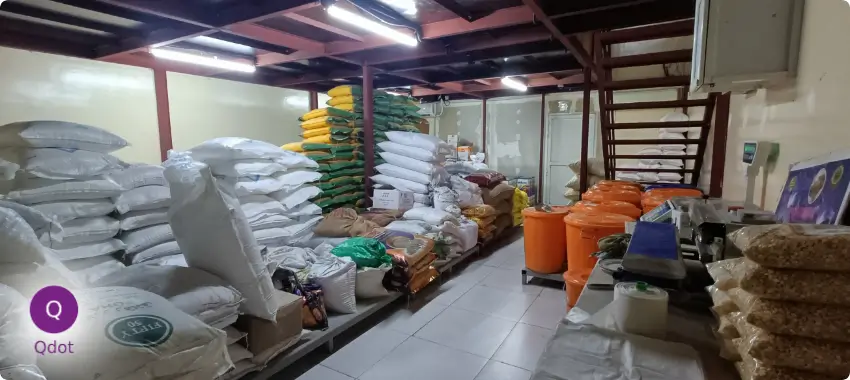
HACCP certification in Umm Al Quwain shows that your food business follows the Hazard Analysis and Critical Control Point system to identify and control food safety hazards. It helps food businesses manage biological, chemical, physical, and allergen-related hazards through a clear HACCP plan, monitoring procedures, corrective actions, verification, and record keeping.
The HACCP certificate is issued by an independent certification or assessment body after a successful audit. Qdot, as a consultancy company, helps Umm Al Quwain food businesses design, document, implement, and prepare their HACCP system for that audit.
HACCP is relevant for Umm Al Quwain mainland and UAQ Free Zone food businesses, including restaurants, catering companies, central kitchens, cloud kitchens, bakeries, food manufacturing companies, processing units, cold stores, food warehouses, food transport companies, packaging businesses, food traders, importers, and exporters.
HACCP Certification Services in Umm Al Quwain
Qdot helps you design, document, implement, and prepare your HACCP system for audit by an independent certification or assessment body. We focus on practical food safety controls that match your real food handling, preparation, production, storage, or transport process.
Our HACCP consultancy services include:
- Gap analysis against HACCP and food safety requirements.
- Process flow review to understand each food handling or production step.
- Hazard analysis for biological, chemical, physical, and allergen-related hazards.
- Critical control point identification with critical limits and monitoring procedures.
- Corrective actions and verification to control deviations and confirm system effectiveness.
- Record keeping support for inspections, customer audits, and certification audit readiness.
- Staff awareness on food handling, personal hygiene, cleaning, sanitation, and temperature control.
- Internal review and audit preparation before the independent assessment.
Qdot does not issue HACCP certificates. We help clients choose certification bodies accredited by recognized accreditation bodies that are part of the Global ACI international recognition framework, so the certificate has stronger credibility with customers, buyers, auditors, and procurement teams.
What HACCP Covers
HACCP is built around seven principles that turn food safety control into a repeatable system. In practice, Qdot helps food businesses apply these principles through a clear HACCP plan and practical records.
- Hazard analysis: identifying biological, chemical, physical, and allergen-related hazards.
- Critical control points: identifying the steps where control is essential for food safety.
- Critical limits: defining safe limits, such as temperature or time controls.
- Monitoring procedures: checking whether each critical control point stays under control.
- Corrective actions: defining what to do when a critical limit is not met.
- Verification: checking that the HACCP system is working properly.
- Record keeping: keeping evidence for inspections, customer audits, and certification review.
HACCP also works with supporting food safety controls such as cleaning and sanitation, pest control, personal hygiene, raw material control, supplier approval, cross-contamination control, traceability, and recall readiness.
HACCP supports food safety control and compliance readiness, but it does not replace legal advice or guarantee full legal compliance.
Why HACCP Matters for Umm Al Quwain Food Businesses
HACCP can become important when customers, buyers, or inspections require evidence of food safety hazard control. It also helps food businesses that want stronger control over food handling, temperature control, hygiene, sanitation, traceability, and product safety records.
A well-prepared HACCP system helps your business:
- Prepare for customer audits, buyer requirements, and food safety inspections.
- Control contamination, cross-contamination, and food safety incidents.
- Improve staff awareness around hygiene, sanitation, allergen control, and monitoring records.
- Support supplier approval, traceability, and recall readiness.
- Build customer confidence through a documented food safety approach.
How to Get HACCP Certification in Umm Al Quwain
The HACCP process starts with understanding your menu, products, process flow, raw materials, storage conditions, hazards, and current food safety controls. Qdot manages the consultancy work, while an independent certification or assessment body performs the audit and issues the certificate after successful completion.
- Gap analysis: Review your current food safety practices.
- Process flow review: Map how food moves through receiving, storage, preparation, processing, packing, service, or dispatch.
- Hazard analysis: Identify biological, chemical, physical, and allergen-related hazards.
- HACCP plan: Define CCPs, critical limits, monitoring procedures, corrective actions, verification, and records.
- Implementation: Apply controls, hygiene practices, temperature control, and record keeping.
- Staff awareness and internal review: Confirm your team understands the system and that records are maintained.
- Certification audit: An independent certification or assessment body reviews your HACCP system.
- Certificate issuance: After successful audit completion, the body issues your HACCP certificate.
HACCP Cost and Timeline in Umm Al Quwain
There is no fixed cost for HACCP certification in Umm Al Quwain. The price depends on business size, number of sites, menu or product complexity, current readiness, consultancy support required, and the certification body's audit fee.
Timeline also depends on readiness and complexity. Small restaurants, kitchens, and outlets usually move faster, while food manufacturers, processing units, cold chain businesses, and multi-site operations may need more time for process flow review, hazard analysis, HACCP plan development, staff awareness, and records.
Qdot provides a clear proposal with consultancy and certification components shown separately, so your team can understand the full scope before starting.
Why Choose Qdot for HACCP Consultancy
- Food safety support: We understand hazard analysis, CCPs, critical limits, monitoring, corrective action, and verification.
- Independent guidance: We prepare your system, while an independent body carries out the certification or assessment.
- Practical documentation: We prepare a HACCP plan your team can actually follow.
- Audit readiness: We support internal review, record checking, and certification audit preparation.
- Transparent proposals: Consultancy and certification costs are explained separately.
- Local coverage: We support businesses across Umm Al Quwain mainland, UAQ Free Zone, and the wider UAE.
If you later need a fuller food safety system, HACCP works alongside ISO 22000 Certification in Umm Al Quwain, GMP Certification in Umm Al Quwain, and Halal Certification in Umm Al Quwain. Qdot can advise on the right option for your customers and markets.
For broader certification support across the emirate, visit our ISO Certification in Umm Al Quwain page. For UAE-wide HACCP support, visit HACCP Certification in UAE.
Contact us
FAQs
HACCP certification shows that your food business uses the Hazard Analysis and Critical Control Point system to identify and control food safety hazards. Umm Al Quwain mainland and UAQ Free Zone food businesses use it to meet customer and inspection requirements.
HACCP is useful for restaurants, catering companies, central kitchens, cloud kitchens, bakeries, food manufacturers, food processing units, cold stores, food warehouses, food transport companies, packaging businesses, food traders, importers, and exporters.
No. Qdot is a consultancy company. We prepare your HACCP system and support audit readiness, while the HACCP certificate is issued by an independent certification or assessment body after successful audit completion.
HACCP covers hazard analysis, biological hazards, chemical hazards, physical hazards, allergen control, critical control points, critical limits, monitoring procedures, corrective actions, verification, record keeping, and supporting hygiene controls.
The process usually starts with gap analysis and process flow review, followed by hazard analysis, HACCP plan development, CCP identification, critical limits, monitoring procedures, corrective actions, record keeping, internal review, and the certification audit by an independent body.
The timeline depends on your readiness, number of sites, menu or product complexity, and current food safety controls. Small outlets move faster, while food manufacturers and multi-site businesses usually need more time.
There is no fixed price. Cost depends on business size, number of sites, menu or product complexity, current readiness, consultancy support required, and the certification body's audit fee.
HACCP is a food safety method focused on identifying and controlling hazards. ISO 22000 is a full Food Safety Management System that includes HACCP principles plus management system requirements. HACCP does not replace ISO 22000, and many businesses start with HACCP and move to ISO 22000 later.