
 UAE
UAE
 Qatar
Qatar
 Pakistan
 KSA
KSA
 Oman
Oman
 Kuwait
 Bahrain
In a fast-changing business environment, organizations in the United Arab Emirates need clear plans to keep essential services running during disruptions. ISO 22301:2019 and NCEMA 7000:2021 provide a structured approach for business continuity planning, emergency preparedness, response, and recovery.
ISO 22301:2019 is an international standard for business continuity management. NCEMA 7000:2021 supports continuity and emergency management requirements in the UAE. Together, these standards help organizations identify risks, reduce operational disruption, protect critical assets, and recover faster during a crisis.
Key Components of ISO 22301:2019

ISO 22301:2019 helps organizations build a formal business continuity management system. The main components include:
- Creating a business continuity policy, scope, and objectives
- Conducting risk assessments and business impact analysis
- Identifying critical activities, dependencies, and recovery priorities
- Developing incident response, continuity, and recovery plans
- Training employees and testing business continuity arrangements
- Monitoring performance and improving the system over time
NCEMA 7000:2021 Core Requirements
NCEMA 7000:2021 is important for UAE organizations that need a stronger continuity and emergency management framework. It aligns with business continuity principles while also considering UAE-specific operational and national resilience needs.
- Establishing a clear continuity management program
- Identifying critical services, resources, and dependencies
- Reducing risks that may affect essential operations
- Preparing response and recovery plans for major incidents
- Improving coordination between internal teams and external stakeholders
- Testing, reviewing, and improving continuity arrangements regularly
Alignment Between ISO 22301 and NCEMA 7000
Using ISO 22301:2019 and NCEMA 7000:2021 together gives UAE organizations a stronger business continuity framework. ISO 22301 supports an internationally recognized management system, while NCEMA 7000 helps organizations address local emergency, crisis, and continuity expectations.
This alignment helps companies build resilience, improve crisis response, protect stakeholders, and keep important operations active when disruption occurs.
Implementation Strategies for Business Continuity Management
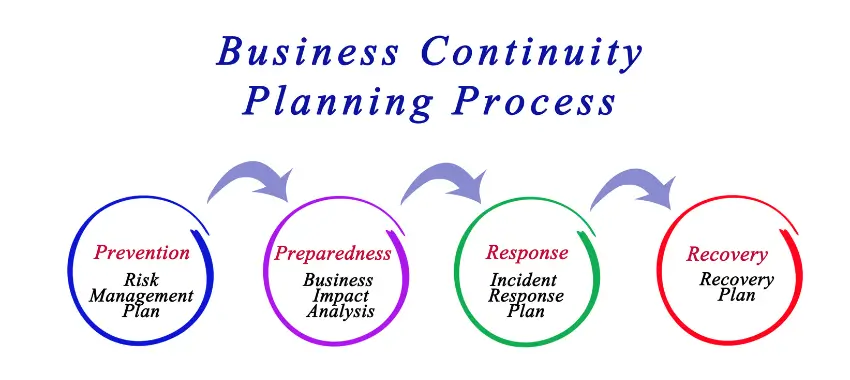
A strong business continuity management system starts with leadership commitment and a clear understanding of business priorities. Organizations should define what must continue during an emergency, what can be paused, and how quickly each activity must be restored.
A detailed risk assessment is also necessary. It helps identify threats, vulnerabilities, and possible impacts on operations. This should include internal risks such as system failure and staffing gaps, as well as external risks such as supply chain disruption, cyber incidents, severe weather, or regulatory interruptions.
Business continuity planning should also include staff awareness, role assignment, communication procedures, and practical exercises. Tabletop exercises and recovery drills help confirm whether the plan works in real situations.
By following ISO 22301:2019 and NCEMA 7000:2021, UAE businesses can improve readiness, reduce downtime, and protect essential operations during unexpected events.
Risk Assessment and Mitigation in National Emergency Planning

Risk management is a core part of business continuity planning. Organizations need to understand which threats could stop critical services and what controls are required to reduce the impact.
Threat Analysis Methods
Threat analysis helps organizations identify risks such as natural disasters, cyberattacks, utility failures, supplier disruption, data loss, and workplace emergencies. Once threats are identified, teams can rank them by likelihood, impact, and recovery difficulty.
Response Strategy Development
After understanding the threats, organizations can develop practical response strategies. These may include crisis communication procedures, incident response teams, backup systems, alternative suppliers, remote work plans, and escalation routes for management decisions.
Recovery Planning Procedures
Recovery planning focuses on restoring operations after a disruption. Companies should define recovery time objectives, recovery point objectives, backup locations, data recovery steps, key suppliers, required equipment, and the people responsible for each recovery action.
Regular testing, review, and improvement are essential. A continuity plan should not stay as a document only. It should be tested, updated, and improved as the organization, risks, and regulatory expectations change.
FAQs
Integrating both standards helps UAE organizations build a stronger continuity system. ISO 22301 provides an international framework, while NCEMA 7000 supports UAE-specific continuity and emergency management expectations.
The main components include business continuity policy, risk assessment, business impact analysis, continuity strategies, incident response plans, recovery procedures, training, testing, performance review, and continual improvement.
NCEMA 7000:2021 focuses on continuity management, emergency preparedness, risk reduction, response planning, recovery planning, coordination, testing, and continuous improvement for UAE organizations.
Business impact analysis helps identify critical activities, acceptable downtime, recovery priorities, key dependencies, and the resources needed to restore operations after a disruption.
A business continuity plan should be tested regularly, especially after major operational changes, new risks, system upgrades, office moves, or changes in key suppliers and team responsibilities.